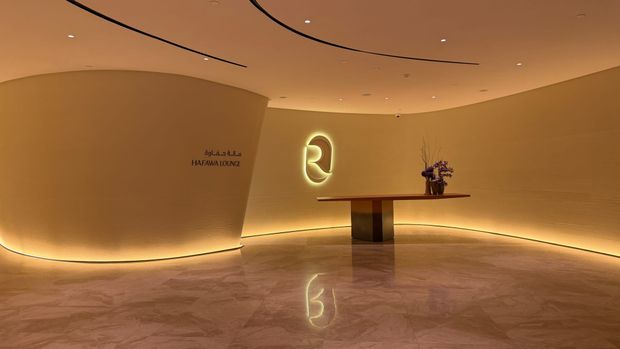
In June, I was on board Riyadh Air's first public flight, from Riyadh to London. It was supposed to be the start of Saudi Arabia's boldest aviation project: a brand-new national airline, backed by the country's sovereign wealth fund, with well over 100 planes on order and a plan to fly to 100 destinations by 2030. This weekend, Riyadh Air is moving its flights out of Riyadh altogether. Starting October 25, the airline will fly from Al Qassim, a regional airport about 250 miles north of the capital, and it's putting passengers on a free bus through the desert to get there.
The First Flight
Spirits were high on that first flight. Crew, staff and passengers all seemed to know they were part of something new, and it showed. When I spoke with Tony Douglas, the airline’s CEO, on board, he told me people were flocking to work for Riyadh Air because it was “new and exciting.” On that flight, it was easy to see why.
It was hard not to be impressed. Riyadh Air was announced by Crown Prince Mohammed bin Salman in 2023, owned by the Public Investment Fund and run by Tony Douglas, who previously led Etihad. It has dozens of Boeing 787s and Airbus jets on order, and by this fall it was flying brand-new 787s from Riyadh to cities including London, Manchester, Madrid, Cairo, Mumbai, Kuala Lumpur and Bangkok.
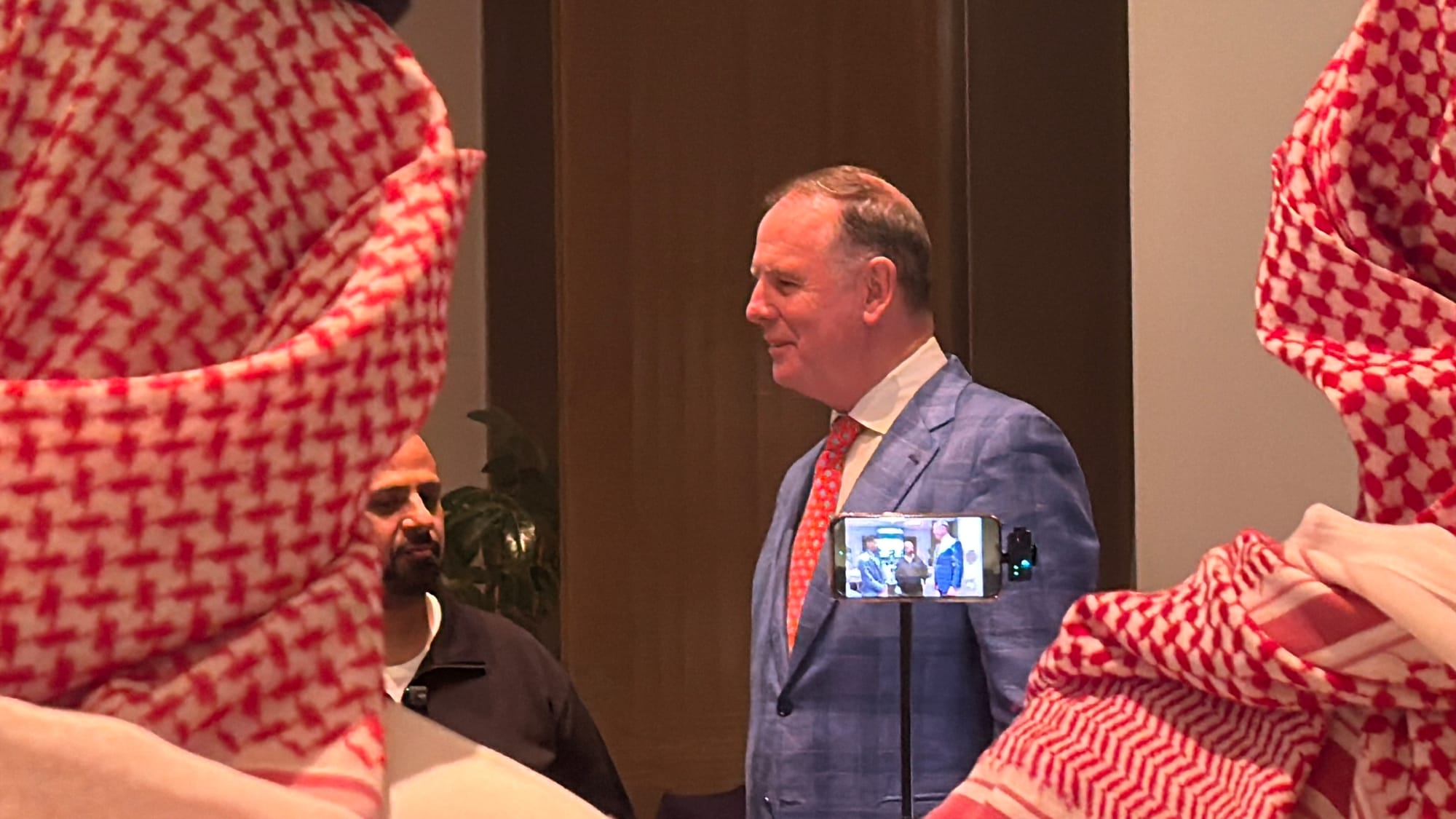
What Happened to Riyadh
Then the attacks came. Yemen's Houthi movement struck Riyadh's main airport four times between October 7 and October 11, killing at least 20 people. A missile that hit the terminals on October 10 shut the airport down. Since then, it has only allowed flights with special permission from Saudi authorities, and only a trickle of flights has returned.
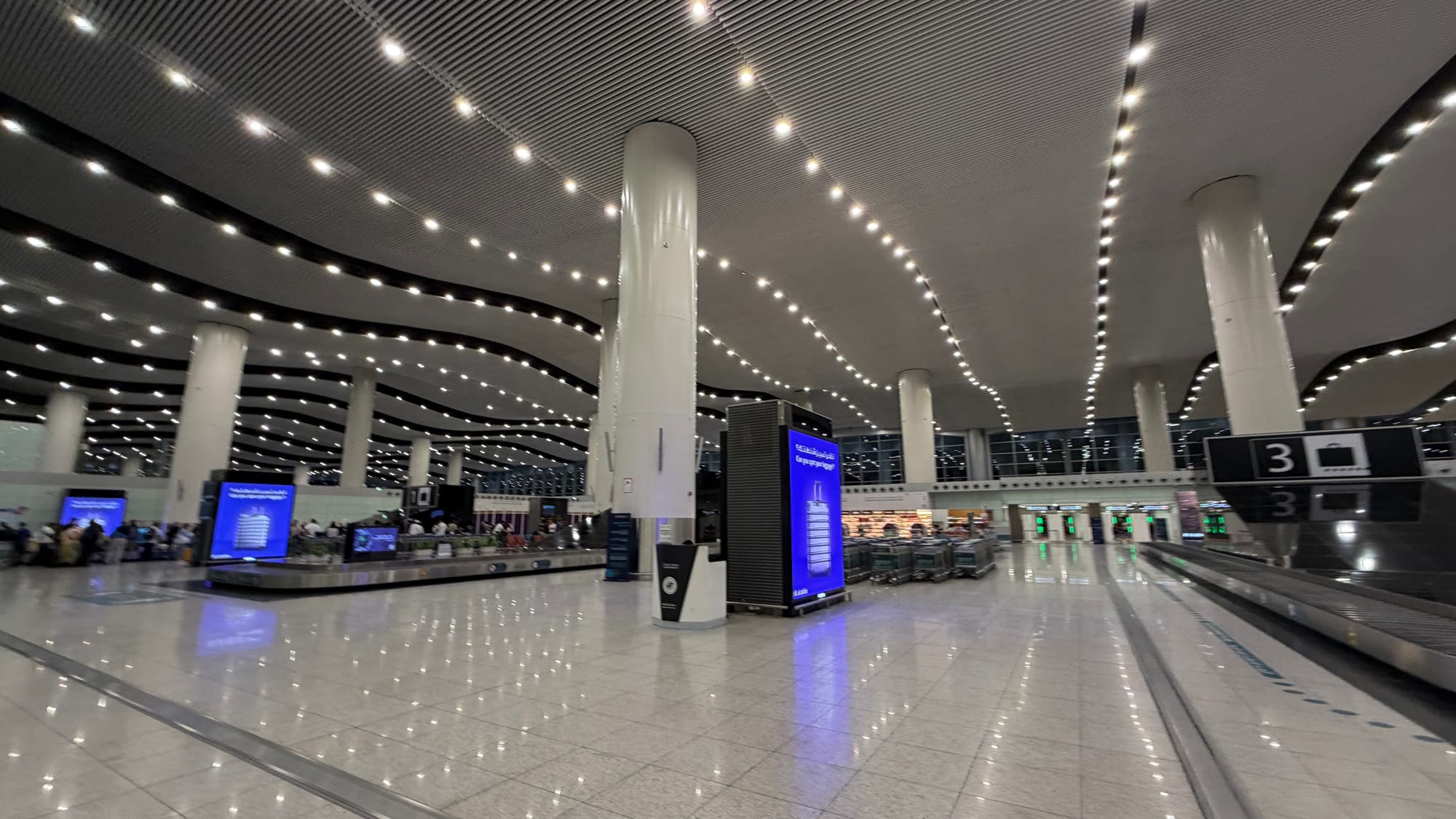
For an airline whose entire network was built around Riyadh, that meant stopping completely. Riyadh Air suspended its flights and moved its planes to safety. On October 13, flight-tracking data showed its 787s leaving Riyadh for AlUla and Medina, while others stayed parked in Jeddah.
Riyadh Air · Al Qassim
Riyadh Air's Detour Through the Desert
Contrail
The Qassim Workaround
Riyadh Air's answer is to fly from somewhere else. From October 25, it's restarting six routes from Al Qassim airport: Cairo, Dhaka, Islamabad, Jeddah, London Heathrow and Lahore. Passengers in the capital can take a free coach from the InterContinental Durrat Al Riyadh hotel, a drive of roughly four hours, timed to arrive before bag drop closes.
It's an unusual move. Airlines sometimes shift flights to another airport during a crisis, but it's rare for a national airline to effectively relocate away from the city it's named after. It also keeps planes flying, crews working and the brand alive while Riyadh remains off-limits, which for a startup airline matters a lot. A grounded airline still has to pay for its planes.
It’s a long way from that first flight to London. In June, the mood on board was all about where Riyadh Air was going next. Now the question is simply how it gets its passengers to a plane.
What's at Stake
Riyadh Air was meant to be the face of Saudi Arabia's travel ambitions, a country aiming for 150 million tourist visits a year by 2030. Right now, its home airport is crippled, foreign airlines are staying away, and the US has ordered non-emergency embassy staff and their families to leave the country.
None of that is Riyadh Air's doing, and the airline still has the money and the planes to bounce back once Riyadh is safe. But four months after its big public debut, it's flying from a place it never planned to be.
If You're Booked on Riyadh Air
If you have a Riyadh Air booking, check it in the airline's app or on its website, since flights from Riyadh are still suspended and only the six Qassim routes are restarting for now. If you're in Riyadh and flying from Al Qassim, plan for the bus ride and get to the hotel early. If your route isn't on the list, contact the airline about a refund or rebooking.