
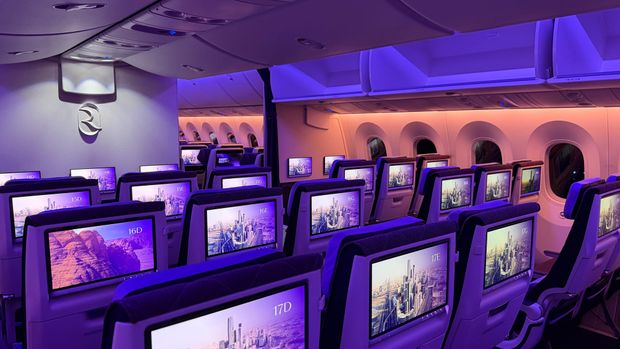
Riyadh Air has had a brutal week. Saudi Arabia's new national airline has been flying the public for only four months, and this week its only hub, King Khalid International Airport in Riyadh, was hit in drone and missile attacks. Yemen's Houthi rebels have attacked four Saudi airports since Monday, Saudi authorities say three people have been killed, and on Thursday officials confirmed that a Saudia plane was hit on the ground in Riyadh.
So can Riyadh Air survive this? I think the airline itself will be fine. The bigger plan behind it is in a lot more trouble.
Riyadh Air
A New Airline's Worst Week
Contrail
A Very Young Airline
Riyadh Air's first commercial flight, from Riyadh to London Heathrow, took off on June 10. It's owned by Saudi Arabia's Public Investment Fund, the country's giant sovereign wealth fund, and it's run by Tony Douglas, who used to lead Etihad.
The airline flies a small fleet of Boeing 787-9s to places like London, Madrid, Dubai, Cairo, Bangkok and Manila, and Jakarta is due in November. It has well over 100 more jets on order and wants to fly to 100 destinations by 2030. It's meant to be a big part of Saudi Arabia's plan to become a major tourism destination and a global connecting hub, much like Dubai and Doha.
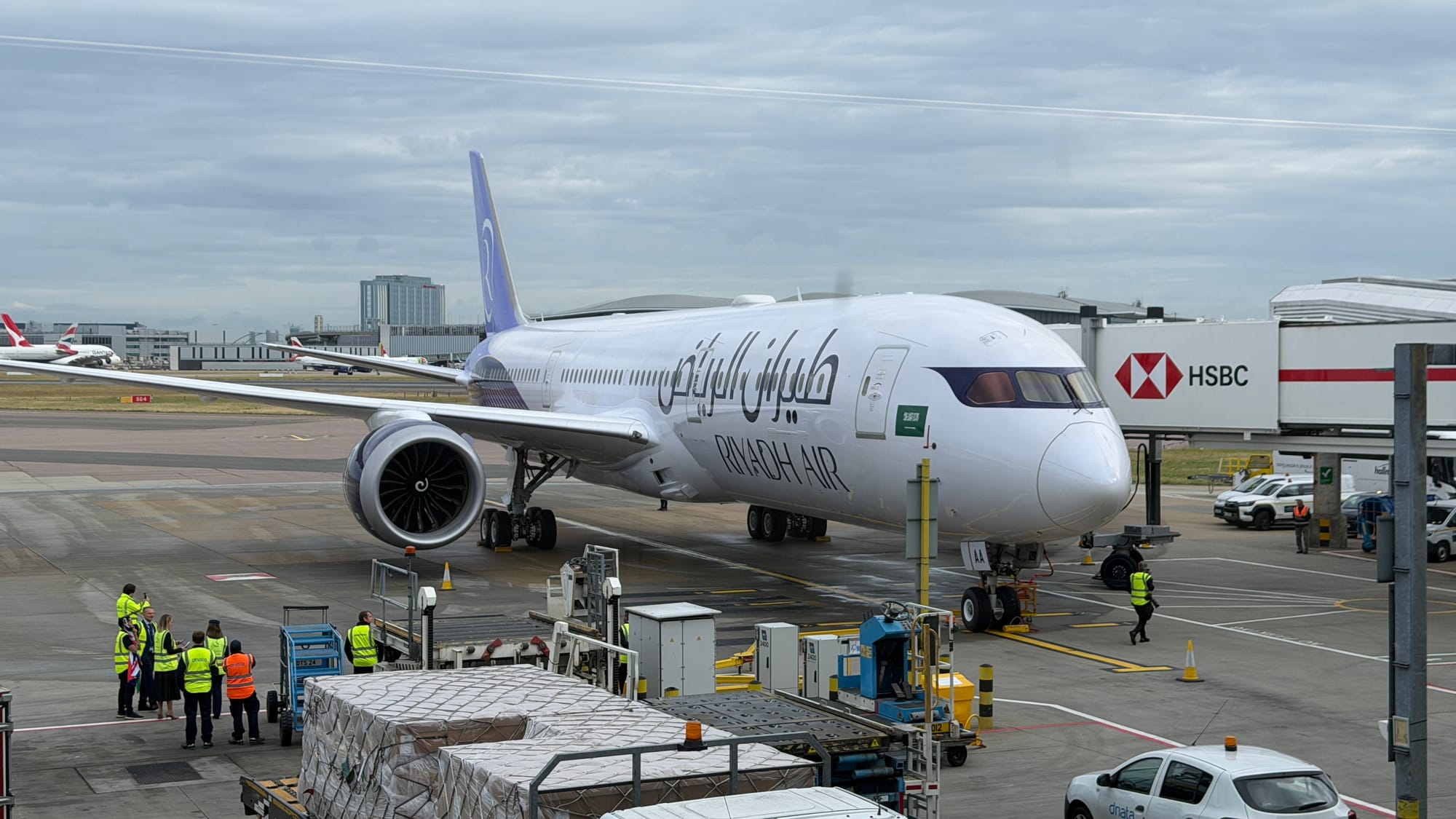
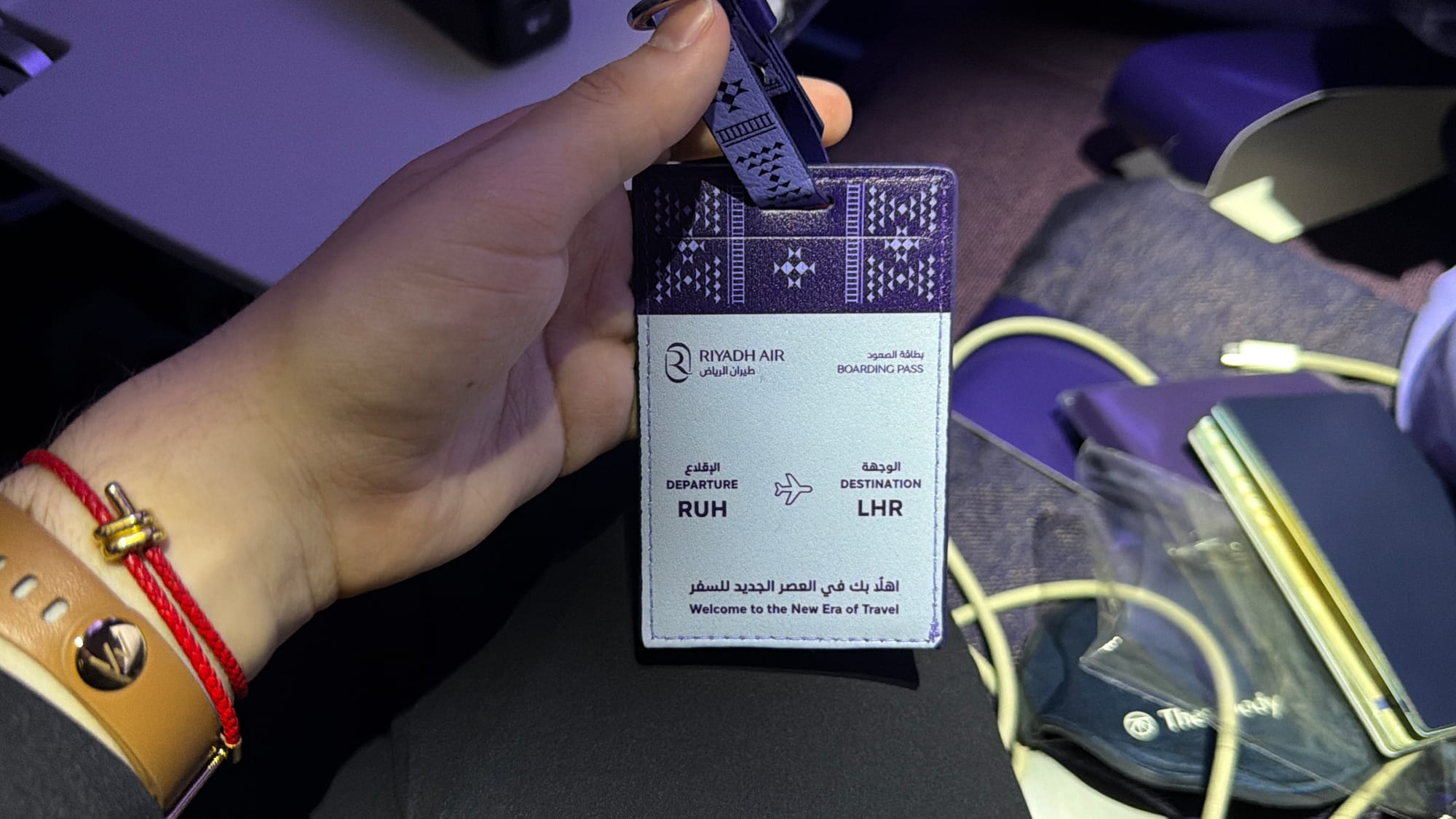
I was on board that first flight to London, and the mood that day is hard to forget. When I spoke with Tony Douglas on that flight, he told me how excited everyone at the airline was to finally be flying. You could feel it across the whole flight. Everyone seemed genuinely excited, staff morale was clearly high, and it felt like the start of something big.
I also asked him about safety in Riyadh, given everything happening in the region. His answer was simple: Riyadh never shut down, even during the unrest that rattled the Middle East in the spring. At the time, that was the whole pitch. This week, for the first time, it wasn't quite true.
What Happened This Week
Flights in Riyadh were briefly halted on Wednesday after the first attacks. Thursday was far worse. Around four in 10 departures from the airport were canceled, and Riyadh Air paused all of its departures from Riyadh for the rest of the day. A long list of foreign airlines canceled flights too, and Lufthansa has suspended its Riyadh service until October 16.
By Friday morning, Saudi officials said the airport had reopened and that traffic had returned to normal, though some airlines are still canceling flights. The Houthis, meanwhile, have warned airlines that they consider any plane in Saudi airspace a target, apart from flights over Mecca and Medina.
Why It'll Survive
Riyadh Air isn't a normal startup that runs out of cash after a bad month. It's a national project backed by one of the richest investment funds in the world. Saudi Arabia has put too much money and pride into this airline to let a few bad weeks sink it.
Saudi airports have also been here before. The Houthis attacked Abha's airport many times between 2019 and 2021, and a missile was shot down over Riyadh's airport back in 2017. Saudia kept flying through all of it. Gulf airlines in general have a long record of riding out regional crises and bouncing back.
The Real Problem
The danger for Riyadh Air isn't going under. The bigger threat is that its business plan depends on something that's very easy to scare off.
To become the next Emirates or Qatar Airways, Riyadh Air needs millions of people who don't care about Riyadh to connect there anyway, on their way from London to Bangkok or New York to Mumbai. Those travelers have plenty of other choices. If the news says missiles are hitting Riyadh's airport, it takes a few clicks to book through Dubai, Doha or Istanbul instead. Connecting passengers are the least loyal customers in aviation, and they're the ones Riyadh Air needs most.
The same goes for the foreign airlines Saudi Arabia wants to attract. Delta's first flight between Atlanta and Riyadh is scheduled for October 23, and its CEO has said safety will decide whether it goes ahead. Every airline that pauses or delays Riyadh flights makes the hub look less reliable, and a hub's whole selling point is reliability.
What Passengers Should Know
If you're booked on Riyadh Air, check your flight status directly with the airline before you head to the airport, and watch for emails about changes. Flights are getting back to normal, but airlines are still making decisions day by day.
It's also worth checking your government's travel advice. The UK now advises against all but essential travel to Riyadh, and that can affect whether your travel insurance covers the trip.
My Take
Riyadh Air will survive this. It has the money, the planes and the government behind it. What it may lose is time, and some of that early energy. The excitement I saw on that first flight to London was real, and I have to imagine a week like this has taken some of the shine off it for the people working there. An airline trying to become a global hub needs travelers to stop thinking about where they're connecting, and this week gave a lot of people a reason to think twice about Riyadh.
How fast that fades depends on whether the attacks stop. If this turns out to be one terrible week, Riyadh Air's ambitions are probably intact. If it becomes a pattern, the airline could end up flying mostly Saudis to and from their own country, which is a very different airline from the one Saudi Arabia is paying for.


