Why do flights arrive early? If you've ever pushed back late and still landed ahead of schedule, you've probably wondered whether the pilot just flew faster. Usually, the answer is much simpler: airlines build extra time into their schedules. To see how much, Contrail analyzed more than 60,000 flights that left 15 of America's biggest airports over six days this month, using flight-tracking data from FlightAware. The numbers say a lot about what "on time" really means, and about where you'll spend the longest sitting on the runway.
I've taken 146 flights this year, and the pilot announcing "we'll be arriving early" has become one of the most predictable lines in the sky. Now I know why.
Most Flights Are Scheduled to Be Late
Here's the clearest finding. Among flights that left the gate within five minutes of their scheduled time, 80% arrived early, typically by about 10 minutes.
That isn't because the flights were unusually fast. Airlines publish schedules with a cushion built in, padding the expected flight time to account for taxi lines, weather and the general unpredictability of airports. Across all the flights we tracked, the typical schedule had about nine minutes more than the flight actually needed, gate to gate.
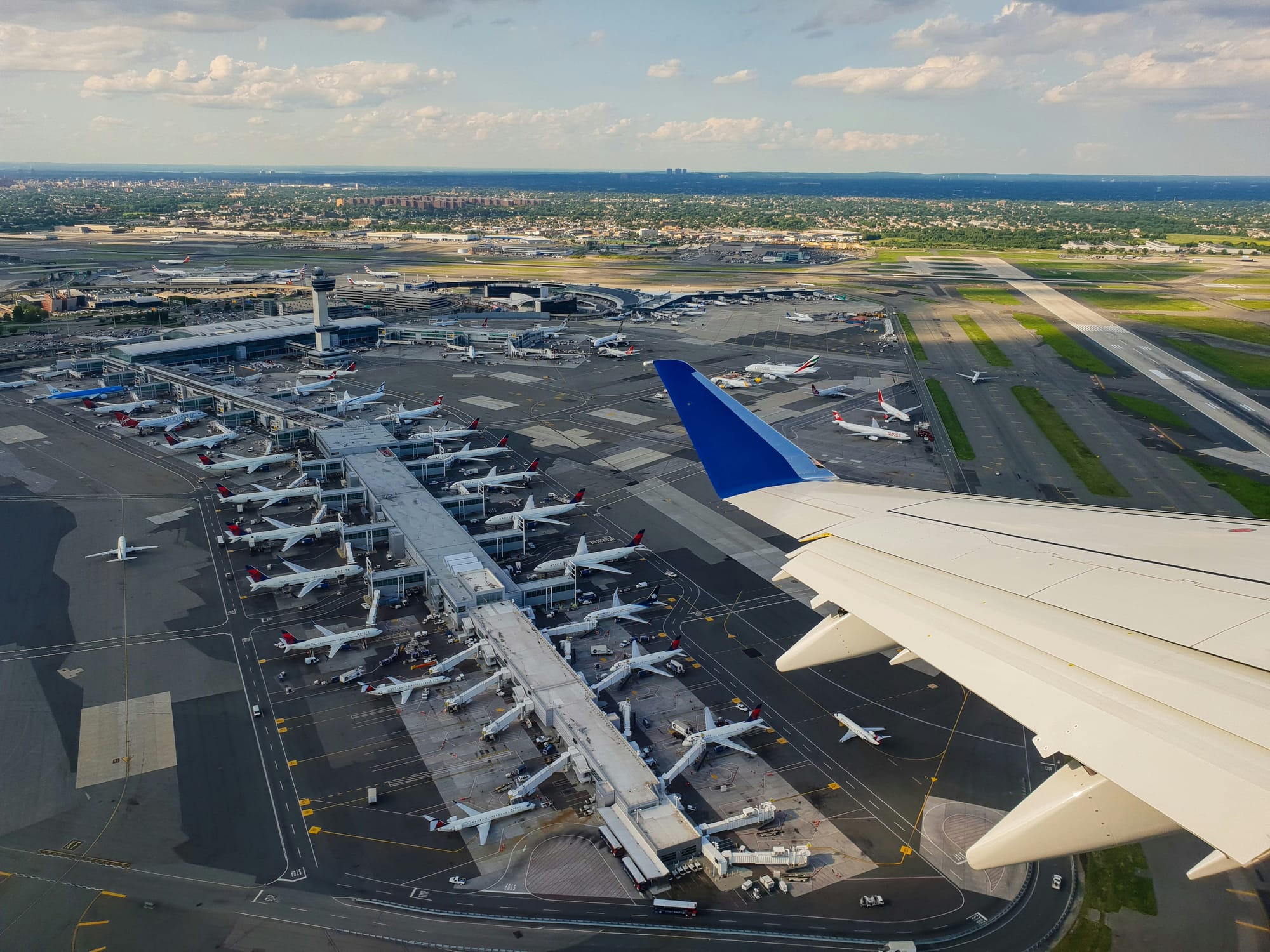
Some airports get more cushion than others. Flights out of New York's JFK had the most, with about 15 extra minutes in the typical schedule, followed by Newark at 12 and Chicago O'Hare at 11. Flights from Atlanta, Los Angeles, Las Vegas and Phoenix had the least, at about seven. Airlines know New York and Chicago are prone to long lines on the ground, so they plan for it. On a good day, that shows up as an early arrival.
The Cushion Only Hides Small Delays
That padding is why a flight that pushes back 10 minutes late often lands on time anyway. But it has limits.
Among flights that left the gate 15 minutes or more late, fewer than one in four still made it to the gate within 15 minutes of schedule, which is the government's definition of on time. The typical late flight made up just nine minutes. So if your flight is running half an hour late, don't count on the pilot making it up. The schedule only has room for small slip-ups.
Contrail Analysis · 61,172 Flights
What "On Time" Really Means
Contrail
Where You'll Wait the Longest Before Takeoff
The other big difference between airports is how long you sit after leaving the gate. Across all 15 airports, the typical flight spent about 20 minutes taxiing before it took off.
JFK, O'Hare and LaGuardia had the longest waits, at about 24 to 26 minutes for the typical flight. But they're long in different ways. O'Hare was slow every single day we checked, with the typical wait between 23 and 29 minutes. New York's airports were less predictable. On Sunday, October 11, the typical JFK departure waited 53 minutes to take off, and one in 10 waited more than an hour and a half. LaGuardia had its own bad day two days later, with typical waits of 37 minutes. Airports in crowded airspace, like New York's three, tend to have long lines, since departures have to be spaced out with all the other traffic around them.
Atlanta stood out for the opposite reason. Even though it's one of the busiest airports in the world, the typical flight there took off about 16 minutes after leaving the gate, the fastest of any airport we checked, and it stayed that way all six days.
On short trips, that wait can take up a surprising share of your day. For flights under 300 miles, the typical taxi before takeoff was 21 minutes, on a trip that took about 69 minutes gate to gate. Nearly a third of the trip was spent on the ground before the plane even left it. After landing, by comparison, the taxi to the gate usually took only about five minutes.
Which Airlines Ran on Time
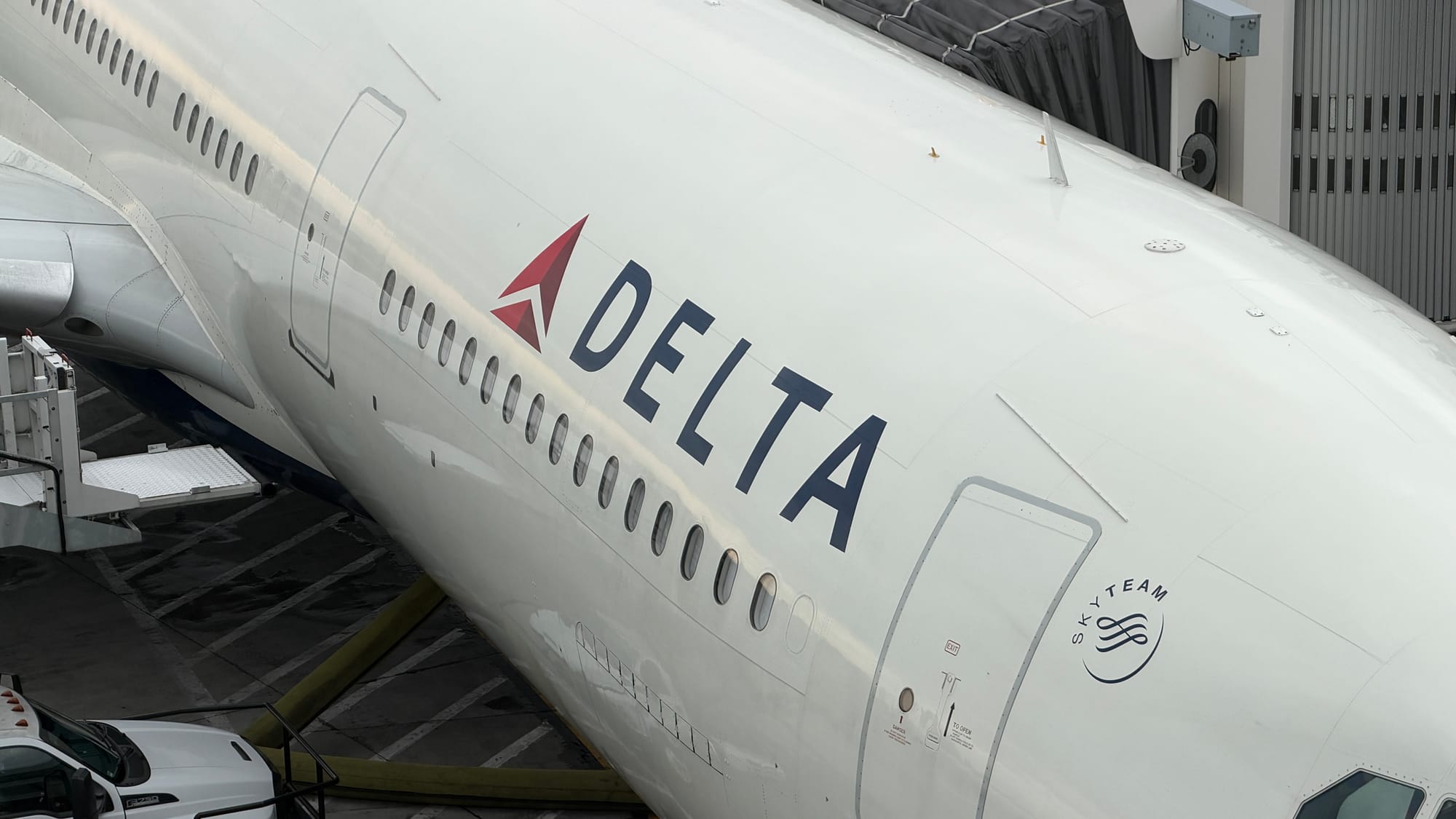
Across the six days, departures from these 15 airports on Delta arrived within 15 minutes of schedule 85% of the time, the best of the big airlines, followed by United at 81% and JetBlue at 79%. American came in at 71%, and Southwest trailed at 61%.
Those numbers depend partly on where each airline flies. Delta's biggest hub, Atlanta, had the shortest waits of any airport we checked, while Southwest flies a lot from airports like Las Vegas and Phoenix, which had weaker numbers overall. So treat this as a snapshot of these airports, not an official ranking.
What It Means for You
- An early arrival isn't a bonus. It usually means the schedule had slack and the day went smoothly.
- A small delay will often vanish, but a big one won't. If you're tight on a connection, plan around the delay you see, not the one you hope the pilot makes up.
- Leave extra time for connections at O'Hare and the New York airports, where the wait before takeoff alone can run half an hour, or much longer on a bad day.
- Long ground delays also eat into crew hours. On a bad day, that's part of why a long delay can turn into a cancellation if the crew can time out.
How we did this: Contrail analyzed FlightAware data for 61,172 scheduled airline departures from 15 major US airports on six days in October 2026 (October 11, 13, 15, 18, 20 and 22), excluding canceled and diverted flights. Gate times are sometimes estimated by FlightAware from tracking data.