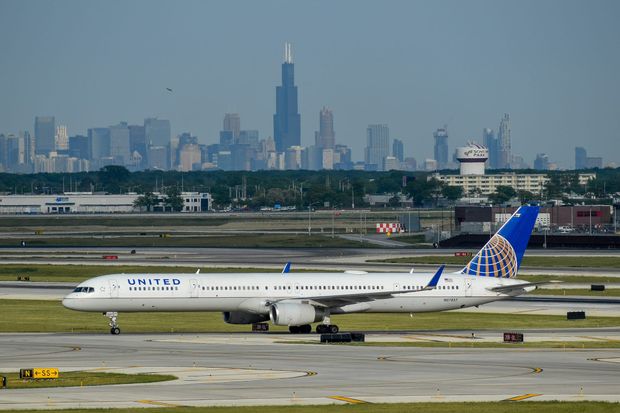
United vs. American at O'Hare is one of the biggest rivalries in US air travel. Chicago O'Hare is one of the few major US airports where two of the country's largest airlines both run giant hubs, and United and American have spent the past year fighting over its gates. So I wanted to know which one actually gets you where you're going on time. I tracked every flight United and American flew out of O'Hare on their own planes for a full week, Nov. 4 to 10, more than 3,900 departures in all.
It wasn't close. But United's win comes with a catch you'll notice the next time you're sitting on the taxiway.
The Results
United's flights from O'Hare reached their destination gate on time 85.2% of the time, using the government's standard of arriving within 15 minutes of schedule. American came in at 73.7%. Put another way, about one in seven United flights arrived late, compared with about one in four on American.
The gap was even bigger leaving Chicago. United pushed back from the gate on time on 86.3% of its flights, while American managed 67.6%. United won every single day of the week, and American's worst day was Monday, Nov. 9, when barely more than half of its O'Hare flights left on time.
American also had far more really long delays. About one in seven of its flights left at least an hour late, compared with about one in 20 on United. The worst one I found was an American flight to San Antonio that was supposed to leave at 8:53 p.m. on Friday and didn't get going until 6:19 a.m. on Sunday, more than 33 hours late. That's less a delay than a surprise weekend in Chicago.
Comparing only the 37 cities both airlines fly to from O'Hare tells the same story: 87% of United's flights arrived on time, versus 74% of American's. United even did better on flights into American's own hubs, including Phoenix and Dallas-Fort Worth. American's clearest win was New York's LaGuardia, where it arrived on time 79% of the time to United's 74%.
Time on the Taxiway
Here's the catch. United's planes spent a lot longer driving between the gate and the runway, which pilots call taxiing. The typical United flight took about 29 minutes from pushback to takeoff, compared with about 20 minutes on American. Nearly half of United's flights spent 30 minutes or more on the ground before taking off, while only about one in six American flights did.
United's CEO, Scott Kirby, has his own explanation. In a speech in Chicago on Tuesday, he blamed long taxi times at O'Hare mainly on a shortage of air traffic controllers at the airport's south control tower, and said proper staffing could cut six or seven minutes off the wait. O'Hare is also enormous, with eight runways, and how far your gate is from the runway in use can add real time. What matters for your trip is that United still got its planes to their destinations on time more often, even after all that waiting. Just don't be surprised if your "on time" United flight spends half an hour in a slow line of planes. Bring a podcast.
When to Fly
Mornings were the best bet on both airlines, which lines up with what I've found before about the best time of day to fly. Planes start the day fresh, before delays have a chance to stack up. United got 92% of its 6 a.m. to 9 a.m. departures out on time, and American 83%.
The evening was where American really fell apart. After 6 p.m., only about six in 10 of its O'Hare departures left on time, and after 9 p.m. it slipped below that. United held up much better at night, with about eight in 10 still leaving on time. If you're stuck with an evening American flight out of Chicago, it's worth knowing that American now lets you stand by for an earlier flight in its app without losing your seat.
Why the Fight Matters
O'Hare is the rare airport where neither giant is willing to back down. United runs roughly half of O'Hare's flights and American about a third. Late last year, a city gate review gave United five more gates and took four away from American, which challenged the decision in court and lost. American has been buying gates where it can and added about 100 flights on its busiest days this year, taking it past 500 daily departures from Chicago. United CEO Scott Kirby made his position clear on an earnings call in January: "We are not going to allow them to win a single gate at our expense."
For travelers, two airlines fighting this hard usually means more flights and better fares. It also means O'Hare is packed with planes at the busiest times of day, and this week's numbers suggest United is handling that crowd better.
What to Book
If getting there on time matters most, United was the safer pick out of O'Hare this week, and it wasn't especially close. If you're flying American, book the earliest flight you can and avoid the last departures of the night. American has had some rough days lately, like the Sunday it delayed nearly 1,500 flights across its network.
A week is a snapshot, not a final verdict, and one snowstorm can reshuffle everything this winter. These numbers cover flights United and American operate on their own planes, not the smaller regional planes flown by partners under the United Express and American Eagle names, and they don't include canceled flights. If you want to see how the same airlines do on the coast-to-coast routes, I ran the same test on flights between New York and Los Angeles, and the results there looked very different.