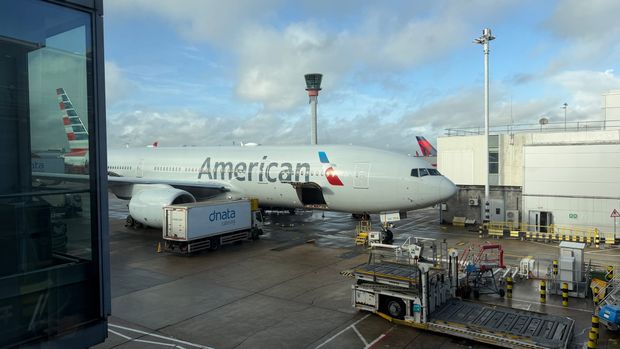
What's the best time of day to fly? If you want to arrive on time, it's the one you probably least want to book. We tracked more than 4,000 flights on 20 busy US routes over 10 days in October, from New York to Los Angeles, Chicago to Dallas and LaGuardia to Boston, Washington and Atlanta, and sorted every one by when it was scheduled to leave. Early morning flights won by a mile.
The Numbers, Hour by Hour
Flights scheduled to leave at 6 a.m. arrived on time 92% of the time, using the US government's standard of reaching the gate within 15 minutes of schedule. At 7 a.m., it was 90%. From there, the numbers slid through the day. By late morning, it was around 81% to 83%, and it hovered between about 81% and 85% through the afternoon.
The worst hour was 5 p.m. Only 76% of flights scheduled to leave then arrived on time, and more than 9% landed over an hour late, more than double the rate of 6 a.m. flights. Flights at 6 and 7 p.m. weren't much better, at 79% to 81%, with about one in 12 at 7 p.m. arriving more than an hour late.
Why Mornings Win
Most delays don't start on your flight. They start on the flights before it. A plane might fly four or five trips in a day, so a 30-minute delay on its first flight can follow it all the way to its last. The first flights of the morning start fresh, with planes that sat at the gate overnight and crews who are already at the airport. Airports are quieter, so there's less waiting in line to take off. Afternoon thunderstorms, which are common for much of the year, haven't built up yet.
By late afternoon, all of that has piled up. Planes are running behind from earlier trips, airports are at their busiest with the evening rush, and air traffic control is more likely to space flights out. That's how you get the 5 p.m. slump.
Late-night flights are a quirk. Flights scheduled at 9 p.m. arrived on time 89% of the time, almost as good as the morning. But only about three-quarters of them actually left on time. They catch up in the air because the skies are quieter and airlines build extra time into those schedules, so a late departure doesn't always mean a late arrival. The catch is that if one of these flights is canceled, there's usually no later flight to rebook you on until the next morning.
The Airline Matters Too
Even at the same airport, airlines can differ a lot. At Chicago O'Hare, home to big hubs for both United and American, United's flights on the routes we tracked arrived on time 86% of the time, while American's managed 80%. American's flights from O'Hare to Los Angeles were on time just 74% of the time, while United's flights the other way, from Los Angeles to O'Hare, hit 93%. Delta, a smaller presence at O'Hare, landed in between at 85%.
How to Use This
If your trip has a tight connection, an important meeting or a cruise to catch, book the first flight of the day when you can. If something does go wrong, you'll also have the rest of the day's flights to rebook onto. Avoid late-afternoon departures from busy hubs when the timing really matters, and if you have to fly then, leave a bigger buffer on the other end.
One caveat: these 10 days in late October had mostly calm weather. Fog, storms and snow can wreck a morning too, as we saw with fog in Denver this month. But on an ordinary day, the early alarm is the best delay insurance you can buy.