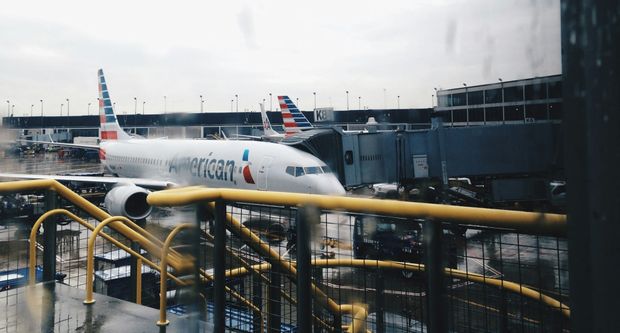
American Airlines delays piled up on Sunday, with nearly 1,500 of its flights leaving late and 90 canceled, according to flight tracking data from FlightAware. That's about two in five American flights running behind, while Delta and United got through Sunday with far fewer problems. We went through the data hub by hub, and the trouble wasn't spread evenly at all. Most of it traces back to two airports, Dallas-Fort Worth and Miami, and to two very different kinds of bad weather.
Where the Delays Hit
American runs its network through a handful of big hubs, and on Sunday several of them held up reasonably well. At Charlotte, Philadelphia and Chicago O'Hare, about one in five departures or fewer left late. New York was in better shape, with roughly five in six departures from LaGuardia and JFK leaving on time.
Dallas-Fort Worth was a different story. American's biggest hub had more than half of its departures leave late, along with 69 cancellations, the most of any hub we tracked. Miami, American's gateway to Latin America, was right behind with about half its departures late and 32 canceled. Phoenix, another American hub, also had a rough day, with about two in five departures late. American's regional airlines, which fly its smaller planes under the American Eagle name, got caught up too: Envoy had about two in five flights delayed and 68 canceled.
For comparison, Delta had about one in seven flights delayed on Sunday and United about one in five. Southwest also struggled, with nearly two in five flights late, though it canceled only a handful.
Fog in Dallas, Storms in Miami
Airport weather reports explain most of what happened. At Dallas-Fort Worth, a thick fog settled in overnight and didn't lift until late morning. Around 7 a.m. local time, visibility was about one-sixteenth of a mile, and by around 9 a.m. it was effectively zero at ground level. It didn't climb back to a couple of miles until close to 10 a.m.
Fog doesn't stop planes from flying, but it slows everything down. Controllers have to space landings further apart, and fewer planes can use the runways each hour. At a hub where American schedules dozens of departures an hour, that adds up fast. Our tracking shows that of the American flights scheduled to leave Dallas-Fort Worth in the 9 a.m. hour, more than eight in 10 left late, and the late ones averaged about two hours behind. Delays stayed high well into the afternoon, long after the fog had cleared.
Miami had the opposite problem: thunderstorms. Storms with lightning and gusts of over 30 mph moved through from mid-morning into the early afternoon, with heavy rain around 11 a.m. When lightning is close to an airport, ground crews have to come off the ramp for safety, which means planes can't be loaded, fueled or pushed back. Nearly every American flight scheduled to leave Miami in the noon hour left late, by about two hours on average.
American hadn't publicly given a reason for Sunday's delays when we checked, so the weather is what the airport records show, not an official explanation.
Why One Bad Morning Ruins the Whole Day
A foggy morning in Dallas doesn't just affect flights from Dallas. The plane that leaves two hours late is the same plane that was supposed to fly to Chicago, then Phoenix, then somewhere else after that, so the delay travels with it all day. Crews run into the same problem. Pilots and flight attendants can only work so many hours, and a long morning delay can push them past their limits later in the day, which is one way a delay turns into a cancellation.
That's why a few hours of fog, like the kind that recently snarled flights in Denver, can show up in delay numbers across an airline's whole network. It also explains why American got hit so much harder than Delta and United. Dallas-Fort Worth and Miami are two of its most important hubs, so bad weather in exactly those two places lands on a huge share of American's flights at once.
If Your Flight Was Delayed or Canceled
US airlines don't owe you compensation for weather delays. If your flight was canceled and you decided not to travel, you're entitled to a refund, and American will typically rebook you on its next available flight at no extra cost.
If you're flying American out of Dallas-Fort Worth in the coming days, it's worth checking your flight in the American app before you leave home, since the app usually shows a new departure time before the airport screens do. And if you have the choice, the first flights of the morning tend to have the best shot at leaving on time, since they aren't waiting on a plane that's already running late, though Sunday was a reminder that fog can still get in the way.