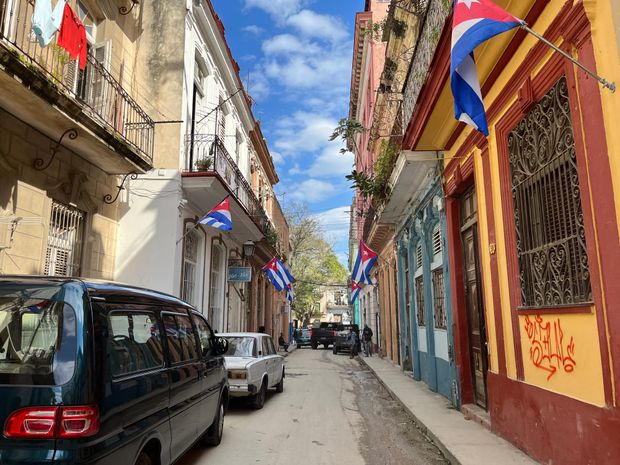
Cuba's jet fuel shortage has quietly cut the island off from much of the world. The country is back in the headlines this weekend after President Trump reportedly warned again that its government won't last much longer, something he's said repeatedly this year. For travelers, though, the bigger change has already happened. Cuba's international airports have been short of jet fuel for most of 2026, and airlines have been leaving one after another. To see how much has changed, Contrail compared every flight FlightAware tracked leaving Havana and Varadero during the same mid-October week over the past three years. A year ago, Havana had 18 nonstop departures a week to Europe. This October, it had none, and Varadero, a winter favorite for Canadians for decades, didn't have a single flight to Canada.
For me, this one is personal. My grandfather fled Cuba as a refugee in the early 1960s, and it's taken me a long time to get to see the place my family comes from. I finally went in mid-2024. Right now, I'm not sure when I'll be able to go back.

What the Flight Data Shows
The drop is steep across the board. Over a week in mid-October 2024, FlightAware recorded 240 departures from Havana. The same week in 2025, it recorded 209. This year, it recorded 162, about a third fewer than two years ago. Varadero fell even harder, from 39 departures to 34 to just 12, all of them heading to Florida.
The routes that disappeared tell the story. In 2024, Havana had nonstop flights to Madrid, Paris, Frankfurt, Rome and Moscow. In October 2025, it still had Madrid, Paris, Rome and Moscow. This October, there were no nonstop departures to Europe at all. Air Europa still flies its Boeing 787 between Havana and Madrid, but on the way back, it now lands in Punta Cana in the Dominican Republic first. Air China's flight to Madrid has started stopping in Nassau, Bahamas. Varadero lost something just as big: its Canadian flights, which made up more than half its departures in each of the past two Octobers, are gone, along with its flights to Moscow.
FlightAware doesn't track every flight in Cuba, especially those run by the country's own airline, so these numbers are a floor rather than a full count. But the gaps are too large to be a quirk of the data.
Why Cuba Ran Out of Jet Fuel
Cuba's fuel crisis began early this year, when Venezuela and Mexico, two of its main oil suppliers, stopped shipping oil to the island. On January 29, President Trump signed an executive order declaring a national emergency over Cuba that also targets countries that supply it with oil. Cuba's aviation authorities have since issued a series of official notices saying jet fuel isn't available at ten of its international airports, including Havana, Varadero, Holguín and Santiago de Cuba. The latest notices run through Sunday, November 1, so travelers should find out very soon whether they're extended again.
The airports aren't closed, but an airport without fuel is a problem for any flight longer than a few hours. A plane landing in Havana has to carry enough fuel for the whole trip home, or stop somewhere else to refuel, which adds time and cost and cuts how many passengers and bags it can carry. For a lot of airlines, that math stopped working. Fuel is a headache for airlines everywhere this year, as Alaska Airlines' warning of a $700 million loss showed, but in Cuba it often isn't there at all. Air Canada, WestJet and Air Transat suspended their Cuba flights in February, and Air France, Turkish Airlines and Iberia followed. Iberia has reportedly pushed its return to the end of June 2027.
Who Still Flies There
The airlines still flying regularly are mostly the ones with short trips. American, Delta and Southwest are still flying from Florida, and American was the biggest airline at Havana in all three years we looked at, because a flight from Miami is short enough that the plane can carry fuel for both directions. Delta has said its daily Miami–Havana flight doesn't need to refuel in Cuba at all. Even so, US airline departures from Havana fell from 78 that week in 2024 to 49 this year. Copa Airlines, through Panama City, is still one of the main ways to connect to the rest of Latin America.
For Cubans and the families trying to reach them, this matters far more than a canceled vacation. vacation. Fewer seats mean higher fares and fewer ways to visit relatives, send supplies or leave. Tourism, which the island's economy leans on heavily, has fewer ways to arrive. And the travelers who used to fill those Canadian and European flights are now going somewhere else.




If You're Planning a Trip
If you're flying to Cuba anytime soon, the most reliable options are nonstop flights from Florida on American, Delta or Southwest, or connections through Panama City, Mexico City or Cancún. If you're flying from Europe, expect a stop on the way back, and check your schedule carefully, since timings can change with little notice. Americans still need to travel under one of the US government's approved categories. I went under "support for the Cuban people," which involves spending time with and supporting local Cubans and their businesses rather than staying at state-run resorts.
I hope I get to go back soon. When I do, I'll be looking at the departure board a lot more closely than I did the first time.