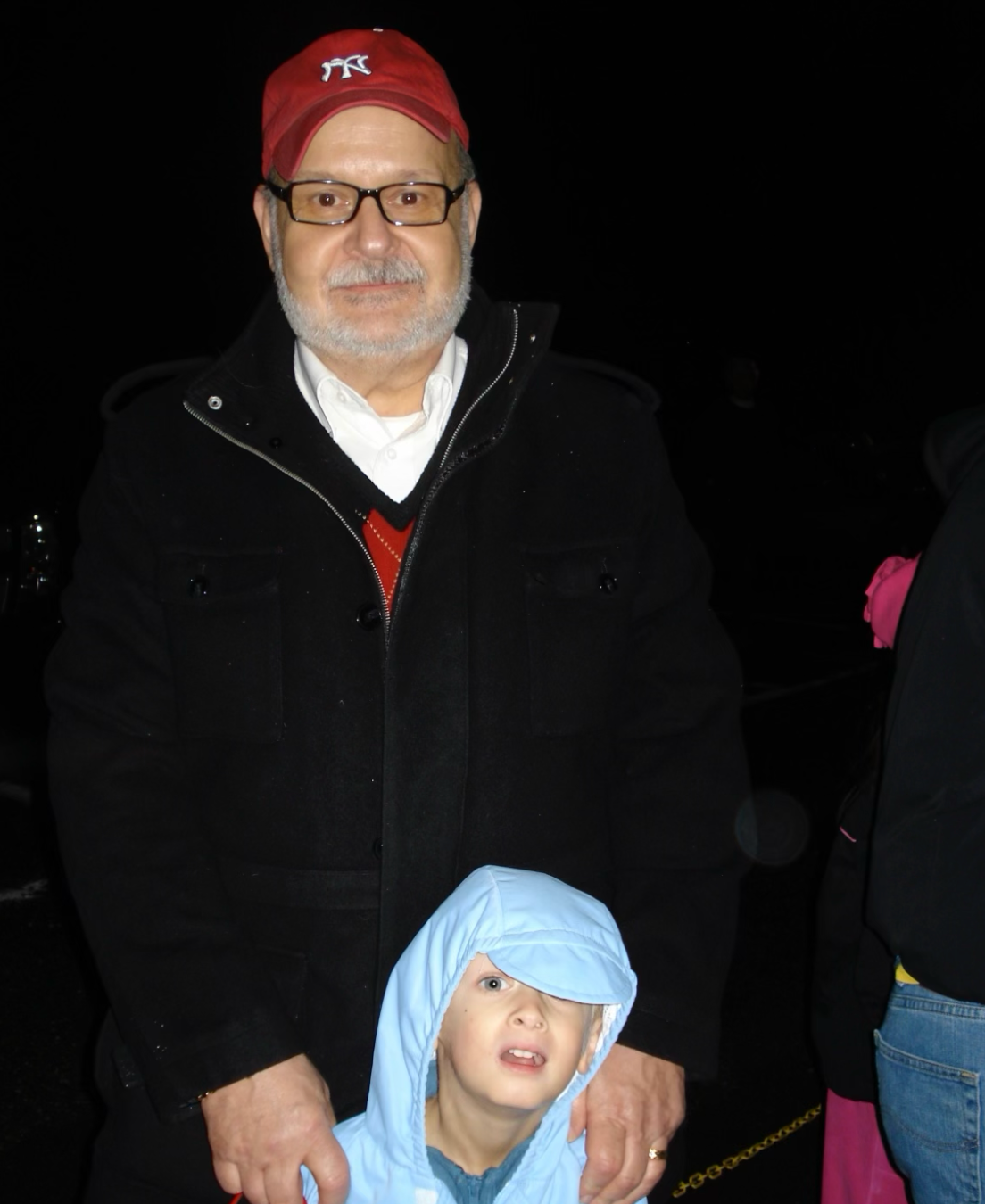
Why is British Airways called "Speedbird"? If you've ever listened to air traffic control, you've heard pilots identify themselves with names that sound nothing like their airline. British Airways flights are "Speedbird," Aer Lingus flights are "Shamrock" and the cargo airline Atlas Air goes by "Giant." These nicknames are called call signs, and every airline has one. To find out how they sound from the other side of the radio, I asked my grandfather, Anthony Darienzo, who spent more than 25 years in air traffic control and ended up running New York Center, the facility that guides planes at high altitude across New York and the surrounding region.
A Career on the Radio
He started in 1970 and spent 17 years at New York Center on Long Island. It took two and a half years of training before he was certified as a radar controller, and from there he worked his way up to supervisor, then director of training, then assistant facility manager. In 1985 he left to become an assistant regional air traffic operations manager at the FAA. Two years later he went back to the center as its facility chief.
He finished his career as the air traffic manager at the tower at Republic Airport, also on Long Island, and held that job until he retired in October 1995. Even then he kept getting pulled back into other roles, including another stint running the center.
As a controller, he handled everything that came through the center's airspace, from airline flights to military operations to private planes. Every few weeks he'd pull an overnight shift, and those quiet hours brought some unexpected voices onto the frequency. "On the mids I occasionally worked pop singers, radio personalities and other famous people who flew on their private aircraft," he told me.
The one he remembers best is Arthur Godfrey, the radio and TV host he'd grown up listening to in the 1950s, who was also a serious pilot. They talked many times. He also worked the singer Petula Clark and the military's flying teams, including the Navy's Blue Angels, the Air Force Thunderbirds and the Army's Golden Knights parachute team.
What a Call Sign Is
Every airline flight gets a call sign, which is the name pilots and controllers use on the radio, followed by the flight number. Many airlines simply use their own name, so United flights are "United" and Delta flights are "Delta." Others use something different, either for history and branding or because their name could be confused with another airline's on a crowded frequency. Airlines register their call signs internationally along with a three-letter code, so no two airlines end up sharing one.
For my grandfather, the nicknames were just part of the job. "Pan Am flew as Clipper, British Airways as Speedbird," he said, and Aer Lingus, which he calls "Irish airlines," was "Shamrock."

The Stories Behind the Names
British Airways' "Speedbird" goes back almost a century. The name started as a logo, a stylized bird designed in 1932 for Imperial Airways, one of the airlines that later became part of British Airways. When its successor BOAC needed a radio call sign, it borrowed the logo's name, and British Airways still uses it today, even though the bird logo itself was retired in 1984.
Other names come from an airline's identity. Aer Lingus uses "Shamrock" for Ireland, and Pan Am used "Clipper" after the flying boats it was famous for. Kalitta Air's "Connie" is named after its founder, Conrad "Connie" Kalitta.
Some call signs were picked to avoid confusion. America West originally used its own name on the radio, but with Southwest and Northwest flying at the same time, there were too many "wests" in the air. The airline held an internal contest, and "Cactus" beat out options like "Roadrunner" and "Phoenix." The name outlived the airline, too. US Airways kept "Cactus" after the two merged, which is why the plane Captain Chesley "Sully" Sullenberger landed on the Hudson River in 2009 flew as "Cactus 1549." It was finally retired in 2015, after US Airways merged into American.
On the Radio · Airline Call Signs
What Pilots Call Their Airline
Contrail
When Two Flights Sound Alike
A memorable nickname is one thing. Two flights that sound almost the same were a much bigger problem, my grandfather said, and many of those mix-ups were potential accidents. Because airline flights repeat on the same schedule every day, the same confusion would come back day after day.
Controllers had a fix for the moment. When two call signs on the frequency were too close, one of the planes got a new call sign, and the computer was updated so it stuck for the rest of that flight. Then management would call the airline and ask it to permanently rename or renumber the flight.
The one he still laughs about involved TWA 500 and Alitalia 500, two flights with the same number from two airlines that no longer exist. TWA was bought by American in 2001, and Alitalia was replaced by ITA Airways in 2021. Both flights came into his airspace at the same time, and while he'd warn each crew about the other, he admits "it was a pain."
One night he cleared the Alitalia flight to descend to 23,000 feet. The crew botched the readback, where pilots repeat an instruction to confirm they heard it right, several times in a row. So he gave the clearance one more time in a Brooklyn Italian accent.
"The pilot on the Alitalia asked me if I was making fun of him," he said. "I replied no. I was making fun of the TWA flight."

How the Job Has Changed
When he started in 1970, the radar showed each plane as little more than a dot. To keep track of which dot was which, controllers used "shrimp boats," small pieces of clear plastic they marked with a grease pencil and pushed across a flat radar display by hand as each flight moved. He calls it a major pain, and it's easy to see why when you picture doing that for every plane in the sky over New York.

Today's equipment is highly digitized, he says. The computer now labels each plane on the screen with its call sign, altitude and speed, so nobody's pushing plastic around anymore.
So the next time you're watching a flight-tracking app or listening to air traffic control and hear "Speedbird" or "Shamrock," you'll know who's talking. And if two flights ever sound a little too alike, there's someone on the ground sorting it out, hopefully without the accent.