
I spent half an hour talking to Isreal, a flight attendant at a US airline, about what actually happens to crew during delays and cancellations. We covered pay, timing out, the crew room, the no-fly list, and what to do with a passenger who won't sit down.
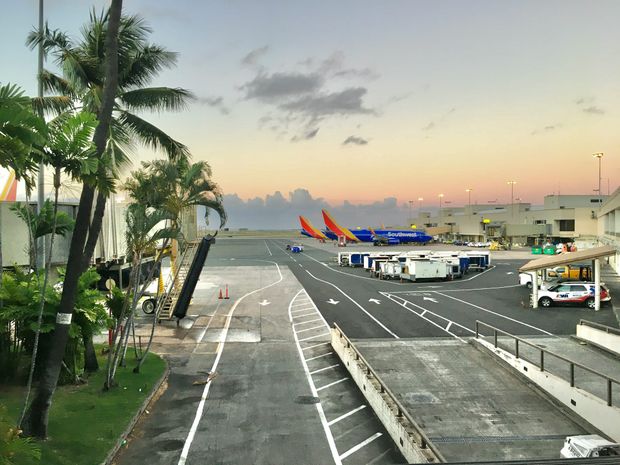
But the thing I keep thinking about is the palm tree.
It came up when I asked whether a cancellation is secretly good news for crew. Free night in a city, dinner on the company, hang out with your colleagues. Isreal said sometimes, sure, but mostly you just want to go home, and then he said this:
"They call us palm trees, like meaning you kinda go with the wind, you just adapt and you go."
They teach it in flight attendant training. Isreal brought it up again at the very end of our conversation, unprompted, when I asked if he had anything to add.
"Be a palm tree. That is like the biggest thing I can tell anybody. They teach you this in training. You must always adapt. You must always just go with the flow, go with the wind. They tell you just let things fall as they are and roll with it. And that's exactly what a palm tree does. They just go with the wind and they go with the motion. And I think that's how everybody should be."

The part that makes it more than a slogan
Here's what gives the line its weight, and it's the actual reporting from our conversation. The crew are bending harder than you are.
Isreal walked me through a recent one in Boston. The countdown clock at the gate, the text saying the flight is delayed fifteen or twenty minutes, then the text saying it's cancelled. And then a to-do list passengers never see: call the company, sort a hotel, sort a car to the hotel, and find out whether you're working the flight home tomorrow or riding it as a passenger.
Separately, he described what a cancellation does to a trip you've already packed for.
"I packed for a three day trip, but this just turned into a four and a half day trip. You're so low on your clothes right now."
That's the person standing at the front of the cabin you're thinking about yelling at. They're stranded too, they found out by text like you did, and they packed for a shorter trip.
And they're barely being paid for the wait. Isreal explained that you don't earn your actual rate until the aircraft door shuts, and that it varies by airline. Some pay nothing until boarding is done. Before the door closes you're on a token amount, which he put at around two dollars fifty.
"So you think you're getting paid exactly all the way, but it is a bit different than what we expect."
So the palm tree advice comes from someone doing the bending for very little money, in clothes they packed for a shorter trip, while being asked to absorb everyone else's frustration.
Field guide
Two ways to stand in a delay
Flight attendants are taught to be palm trees. Here's the same weather, two responses.
✓Asks the gate agent what's actually known
✓Rebooks itself in the app while the line forms
✓Assumes the crew found out when you did
✓Eats something, finds a plug, waits
✕Demands a different answer from the same person
✕Stands in line instead of using the app
✕Assumes somebody chose this to spite them
✕Raises their voice in front of the whole gate
Neither tree controls the weather. The delay is the same length either way. "They call us palm trees, like meaning you kinda go with the wind, you just adapt and you go." — Isreal, flight attendant
The Contrail
It also works, which is the best part
The most striking thing Isreal said about difficult passengers wasn't about handcuffs or the no-fly list, though we got to those. It was how often people come back around.
"I see it more often than not."
He described a recent flight where a woman was clearly upset. He didn't raise his voice and he didn't hover over her. In his words, he came down to her level and asked what was going on. She was coming back from a funeral.
"She calmed down, apologized, hey, I apologize for acting this way. I know it's not right. I'm just frustrated. I'm going through a lot right now."
That's a palm tree on both sides of the exchange. He bent, she bent, and nothing escalated. The version where he matched her energy ends somewhere much worse for everyone.
So: be a palm tree
I've taken well over a hundred flights this year and I've had my share of cancellations, gate changes and nights I didn't plan for. I've never had a single one improved by being rigid about it.
Isreal's version of this is a training-manual line about adapting to the wind. Mine is simpler, and it's the thing I'd actually tell people. The person in front of you at the gate found out at the same time you did, is going through the same night you are, and is on something like two dollars fifty until the door shuts, and is standing there while you decide how to react.
Bend.
Listen to the full Contrail podcast episode to learn more about my conversation with Isreal:


