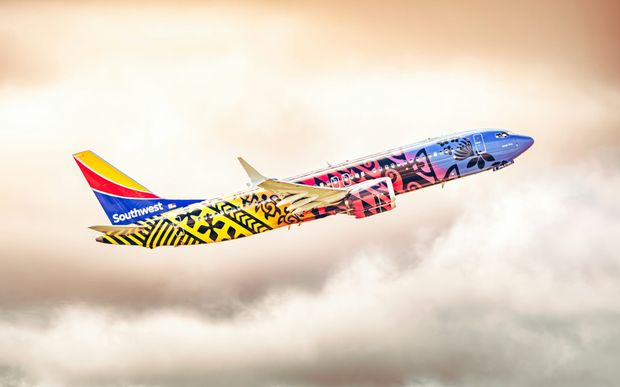
Southwest's scary 2024 "Dutch roll" flight finally has a full explanation, and it started with a storm while the plane was parked on the ground. The National Transportation Safety Board, the US agency that investigates serious plane incidents, released its final report on Southwest Flight 746 on Thursday. It found that thunderstorm gusts up to 84 mph likely damaged part of the plane's tail in New Orleans, and that nobody inspected it before it went back to carrying passengers.
Nine days later, on May 25, 2024, the Boeing 737 MAX 8 started rocking side to side at 34,000 feet on its way from Phoenix to Oakland. All 175 passengers and six crew members landed safely, and no one was hurt.
What Is a Dutch Roll?
A Dutch roll is a wobble where a plane's nose swings side to side while its wings rock up and down at the same time, so the plane sort of wags its way through the air. The name is often said to come from the swaying motion of Dutch ice skaters. Modern planes have a system called a yaw damper that automatically steadies the rudder, the movable flap on the tail fin, to stop it from happening. It's the kind of motion that makes even frequent flyers grab the armrest.
On Flight 746, the captain reported "a small amount of Dutch roll" after the plane reached cruising altitude, and the pilots could feel the rudder pedals moving on their own. It happened again after they descended to 32,000 feet. The longest episode lasted about 20 seconds. The NTSB rated the damage to the plane as substantial, which is why the event counts as an accident rather than a lesser incident.
What Went Wrong
On the night of May 16, 2024, thunderstorms with gusts up to 73 knots, about 84 mph, hit the parked plane in New Orleans. The NTSB says the wind likely shoved the rudder hard enough to damage ribs inside the tail fin, right where a backup rudder control unit is mounted.
Boeing's maintenance manual already called for a special inspection after extreme winds, but it never said how strong the wind had to be. Southwest also had no system for alerting its maintenance team when a parked plane got caught in that kind of storm. So the plane flew the next morning without being checked, and it kept flying passengers for more than a week, dozens of flights in all, according to reports on the NTSB's findings.
There was one more chance to catch it. During maintenance in Houston on May 23, a test of the plane's backup hydraulic system was signed off as passed. Video from the hangar later showed the rudder moving right but not left, and nobody was standing at the tail to see it. The NTSB couldn't determine whether that test made the damage worse.
What's Changed Since
Southwest inspected the same part of the tail on its other 737 MAX planes and found no similar damage. It now requires individual mechanics to sign off on that hydraulic test, and it set up a process to alert maintenance control whenever a parked plane is exposed to extreme winds. Boeing revised its manual so the special inspection is required after winds of 65 knots, about 75 mph. In other words, "extreme wind" finally has a number.
Run the new rule against the old storm and the gap is hard to miss. The gusts in New Orleans peaked at 73 knots, eight knots above Boeing's new 65-knot trigger. Under today's rules, that storm would have called for an inspection before the plane's first flight the next morning, instead of nine days and dozens of passenger flights later. The fix isn't a new part or a redesign. It's a phone call to maintenance and a number in a manual, which says a lot about how small the gap was that let this slip through.
Strong wind is a bigger deal for planes on the ground than most travelers realize. It's the same force that can keep flights stuck at the gate in Las Vegas or slow San Francisco to a crawl, and a parked plane is essentially a giant sail with its controls locked in place.
Should You Worry About Flying Southwest?
The NTSB tied Flight 746 to storm damage and missed inspections, not to a problem with the design of the 737 MAX. That matters, because the fixes go straight at the gaps that let it happen: a clear wind threshold, an alert when a parked plane gets hit and a second set of eyes on the test that should have caught it.
I'll be honest: it's off-putting when a story like this comes out. Nobody wants to read about a maintenance lapse right before they board. But it's worth remembering the scale. The FAA handles roughly 45,000 flights a day across the US, Southwest alone runs thousands of them, and incidents like Flight 746 are a minuscule slice of all that flying.
It's also a reminder of how much of flying safety happens out of sight. Passengers never see the inspections, sign-offs and maintenance logs behind every departure, just like they rarely hear about the issues pilots raise behind the scenes. Reports like this one are how the system finds its weak spots and closes them, even when it takes two and a half years to get the full answer.