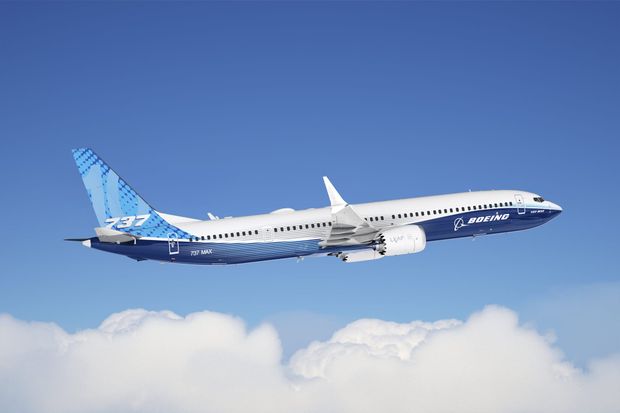
The Boeing 737 MAX 10 is finally certified. The Federal Aviation Administration approved Boeing's biggest 737 to carry passengers on Tuesday, October 20, about nine years after Boeing first showed it off at the 2017 Paris Air Show. More than 1,500 of them are on order, and United, American, Delta and Alaska are all waiting on deliveries. If you fly domestically in the US, there's a good chance you'll end up on one in the next few years, though probably not before 2027.
What the MAX 10 Is
The 737 is the most common type of jet you'll board on a US domestic flight, and it comes in several lengths. The MAX 10 is the longest one Boeing has ever built, stretched about five feet beyond the MAX 9 so it can fit a few more rows. A typical layout seats between 185 and 210 people, compared with 175 to 195 on a MAX 9 and 160 to 180 on the MAX 8 that you've probably already flown. Squeezed to the maximum, it can hold up to 230.
Inside, it'll feel like any other recent 737: the same cabin width, the same overhead bins and the same seats your airline already uses. What you might notice is the length. More rows means more people boarding through the same front door, more competition for overhead space and a longer walk to the back. The extra length also forced one visible change: taller main landing gear, so the tail doesn't scrape the runway on takeoff.
The plane is Boeing's answer to the Airbus A321neo, which has been flying since 2017 and has sold strongly to airlines that want a big single-aisle jet. The largest A321neo versions still carry more people and fly farther, so the MAX 10 is less about winning that matchup outright and more about giving Boeing's customers a bigger option that fits the 737 fleets, pilots and maintenance crews they already have.
Why It Took So Long
The MAX 10 was supposed to enter service around 2020. Instead, it got caught up in everything that went wrong with the 737 MAX family. Two crashes involving the smaller MAX 8 killed 346 people in 2018 and 2019, grounded the MAX worldwide and led the FAA to overhaul how it certifies new planes. Then, in January 2024, a panel blew out of an Alaska Airlines MAX 9 in midair, bringing new scrutiny of how Boeing builds its planes. Along the way, engineers also had to fix technical issues, including a problem with the engines' anti-ice system that held up both the MAX 10 and the smaller MAX 7, which was approved in August.
Over the past year and a half, the FAA has gradually loosened the restrictions it placed on Boeing. The MAX 10's approval completes the four-model MAX lineup.
Boeing 737 MAX 10
The Biggest 737 Is Cleared to Fly
Contrail
Who's Flying It and When
Boeing says deliveries will begin in 2027. The first one is reportedly going to the Canadian airline WestJet, through a leasing company, early in the year. Before any individual plane carries passengers, the FAA still has to sign off on it, and airlines outside the US need their own regulators' approval too.
United has the biggest order of any single airline, with 167, followed by Ryanair, American, WestJet, VietJet, Alaska, Delta and the Turkish airline Pegasus, each with about 100 or more. In total, Boeing has 1,555 MAX 10s on order from more than 30 customers, almost a third of all the 737 MAXs it hasn't delivered yet.
For US airlines, the timing matters. Many have been short on planes for years because of Boeing's delays, which has kept them from adding flights as fast as they wanted. A bigger 737 lets an airline carry more people on the same flight without adding more takeoff slots or pilots, and it burns less fuel per seat than the older jets it'll replace, which counts for more now that jet fuel prices have roughly doubled this year.
Is It Safe?
Certification means the FAA has reviewed the design and decided it meets federal safety standards, after almost 1,000 test flights. It doesn't end the oversight. Boeing still has to show it can build each plane to that design consistently, and every MAX 10 gets checked individually before it's allowed to carry passengers. The rest of the MAX family has been back in service carrying passengers every day since late 2020.
If you'd like to know what you're flying, check the aircraft type when you book. Most airlines list it on the seat map or flight details page, and you can also look up the flight on a tracking app the day before. Once United and the others start taking deliveries, "737 MAX 10" is going to start showing up a lot more often.