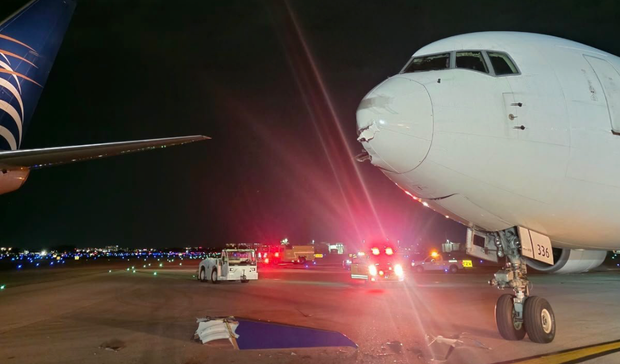
The photos from this Miami airport plane crash look like a scene that shouldn't be possible. On Saturday night, a UPS cargo plane and a Copa Airlines passenger jet collided while taxiing at Miami International Airport, and the Copa jet's wingtip sliced into the nose of the UPS freighter, leaving its tip shredded and the cargo plane's nose dented. It's a startling reminder of how these ground collisions happen, coming just a day after the FAA grounded every flight in the country.
What Happened in Miami
It happened around 9:15 p.m. Saturday. UPS Flight 358, a Boeing 767 freighter, was taxiing out for a flight to Bogota, Colombia, while Copa Airlines Flight 427, a Boeing 737 arriving from Panama City with 172 people aboard, was taxiing in. According to the FAA, the 737's left wingtip struck the nose of the 767 where two taxiways meet.
Air traffic control audio, as reported by Simple Flying, suggests the UPS crew had been told to give way to the Copa jet. After the Copa pilots radioed that "somebody hit us," the controller reminded the UPS crew they were "supposed to give way," and a UPS pilot replied that they had gone too far. Two people were reportedly treated at the scene for minor injuries, and neither went to the hospital. The airport said other flights were routed around the scene, and the FAA is investigating. UPS said its crew is safe and it's cooperating with authorities.
How Ground Collisions Happen
It sounds strange that two planes moving at walking pace could hit each other, but the ground is one of the trickiest parts of any flight. Airports are crowded mazes of taxiways, and at night they're a sea of blue and yellow lights where judging distance is much harder. Pilots also can't see their own wingtips from the cockpit, especially on bigger planes, so they rely on painted lines, signs and instructions from controllers to keep clear of everything else.
Most taxiway incidents come down to a few things. A crew misses or misunderstands an instruction to stop and wait, a plane rolls past the point where it was supposed to hold, or two aircraft end up at the same intersection at the same time. Workload matters too. Before takeoff, pilots are running checklists and setting up for departure, and a last-minute runway change can pile on even more, which may have played a part here. Controllers clear planes along their routes, but keeping a safe distance from another plane on the ground is ultimately up to the pilots.
These collisions aren't common, and when they do happen they're usually minor scrapes like this one. But they happen often enough to be a known risk. In October 2025, two Delta Connection jets collided at LaGuardia when one plane's wing hit the other's cockpit, injuring a flight attendant. Each one adds to pressure on airports and the FAA to add more ground radar, better warning systems and clearer taxiway markings.
What It Means for Travelers
Honestly, my first thought seeing these photos was that I'm surprised this doesn't happen more often. Think about how many planes are moving around the world's airports at any given moment, squeezing past each other on tight taxiways, often at night, with crews racing tight schedules. The fact that collisions like this are so rare says a lot about how well pilots and controllers usually manage that dance.
If you were flying through Miami on Saturday night, this didn't cause wider delays, according to the airport. For everyone else, it's worth keeping in perspective. Ground collisions make for alarming photos, but they're rare and rarely serious, and flying remains the safest way to travel. It just caps off a weekend that's tested the system from every angle, starting with Friday's nationwide FAA ground stop.