
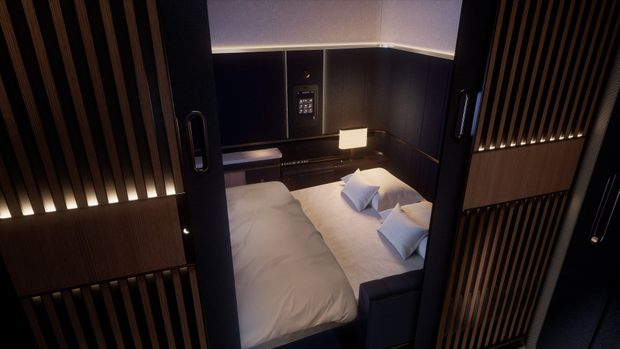
In 2017, Lufthansa announced a complete overhaul of its long-haul cabins. New seats in every class, a business class where everyone gets direct access to an aisle, some seats with doors that close. The airline gave the whole thing a name, Allegris, and put out the press release.
I was twelve.
The first aircraft carrying those seats flew a 40-minute nonrevenue hop from Munich to Frankfurt in April 2024. As recently as this March, there were still three business class seats on its 787-9s that regulators hadn't cleared for passengers to sit in.
Seven years from announcement to service, and counting, for a cabin that isn't finished yet.
That's the extreme end of something I run into constantly now. An airline announces a new aircraft or a new cabin, collects the coverage, and then the thing simply doesn't exist for years. Somewhere between the press release and the boarding pass, an entire product cycle disappears.
If you've ever booked a flight expecting the seat you saw in an article and gotten something twenty years old instead, this is why.
I want to work out whether that's the airlines hyping too early or the industry breaking underneath them after the fact. Having gone through it, the answer is both, and the two feed each other in a way nobody planned.
Start with the aircraft nobody has
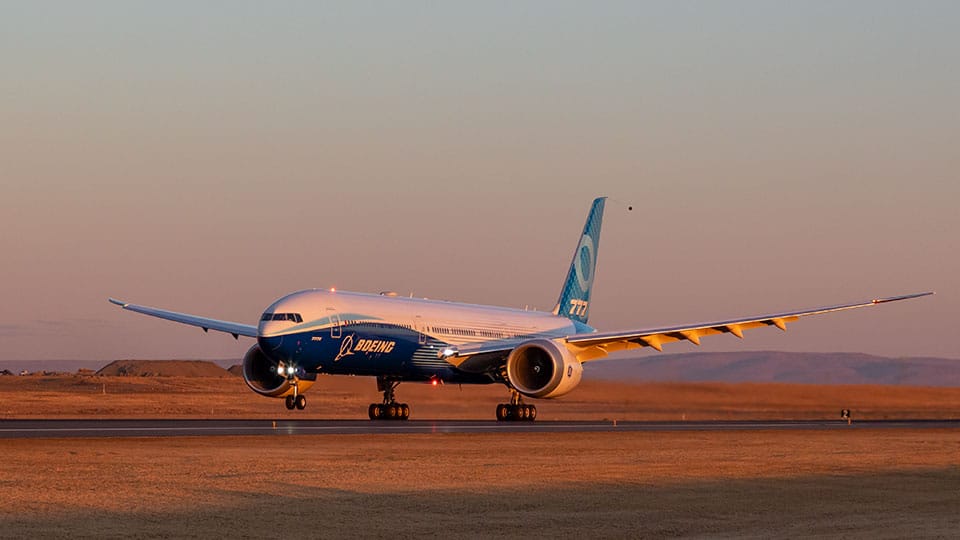
The Boeing 777X is the replacement for the 777, the big twin-engine jet that does a lot of the world's long-haul flying. Boeing launched the program in 2013, and the aircraft was originally due to carry passengers in 2020.
Boeing confirmed in its first quarter 2026 results that the 777-9 program continued to make progress on certification and that it anticipates first delivery in 2027. Launch customer Lufthansa is expected to receive the first aircraft, with Lufthansa Aviation Training indicating mid-2027. Cathay Pacific has said it expects its first 777-9 in 2027. Emirates has signaled late 2027.
Boeing 777X
Launched in 2013, still arriving
Program launch to first delivery, against the original plan.
Planned entry
Program launched 2013
Now expected
Boeing anticipates first delivery, per Q1 2026 results
Cost of the slip
Estimated write-offs and cost overruns
Qatar had planned a 2022 launch for the type and intended to introduce a new first class product on it. Emirates has taken A350-900s to cover the gap and retrofitted its 777-300ERs and A380s. Dates as indicated by the carriers and by Boeing, and all have moved before.
contrail.travel
That's seven years late on a program estimated to have absorbed around $15 billion in write-offs and cost overruns. Causes reported along the way include GE9X engine durability issues under high-compression testing. Flight control software compliance and increased FAA scrutiny have also been cited. In March the FAA cleared the 777-9 into Type Inspection Authorization Phase 4A, which is a real milestone and also the kind of milestone most people outside the industry have no way to interpret.
Follow the knock-on effects and this gets more interesting. Emirates holds the largest commitment on the type and has taken Airbus A350-900s to plug the gap, while pouring money into retrofitting its existing 777-300ERs and A380s so the premium cabins feel current. Qatar Airways ordered 50 in 2013 and had planned a 2022 launch, with a new first class product intended for the aircraft. Singapore Airlines has been developing new first and business products specifically for the platform.
So there are airlines that designed cabins for an aircraft that has been arriving next year for seven consecutive years.
The cabin that outlived its aircraft
Allegris was meant to debut on the 777-9 in 2020. When that slipped, Lufthansa eventually moved it onto A350s and 787s instead, which is the sensible response to an aircraft that won't come.
What happened next isn't Boeing's fault.
Rather than buying an off-the-shelf business class seat, Lufthansa commissioned a bespoke product. Not one seat, but several variants with different features. And the seats are built by different manufacturers depending on which aircraft type they're going into.
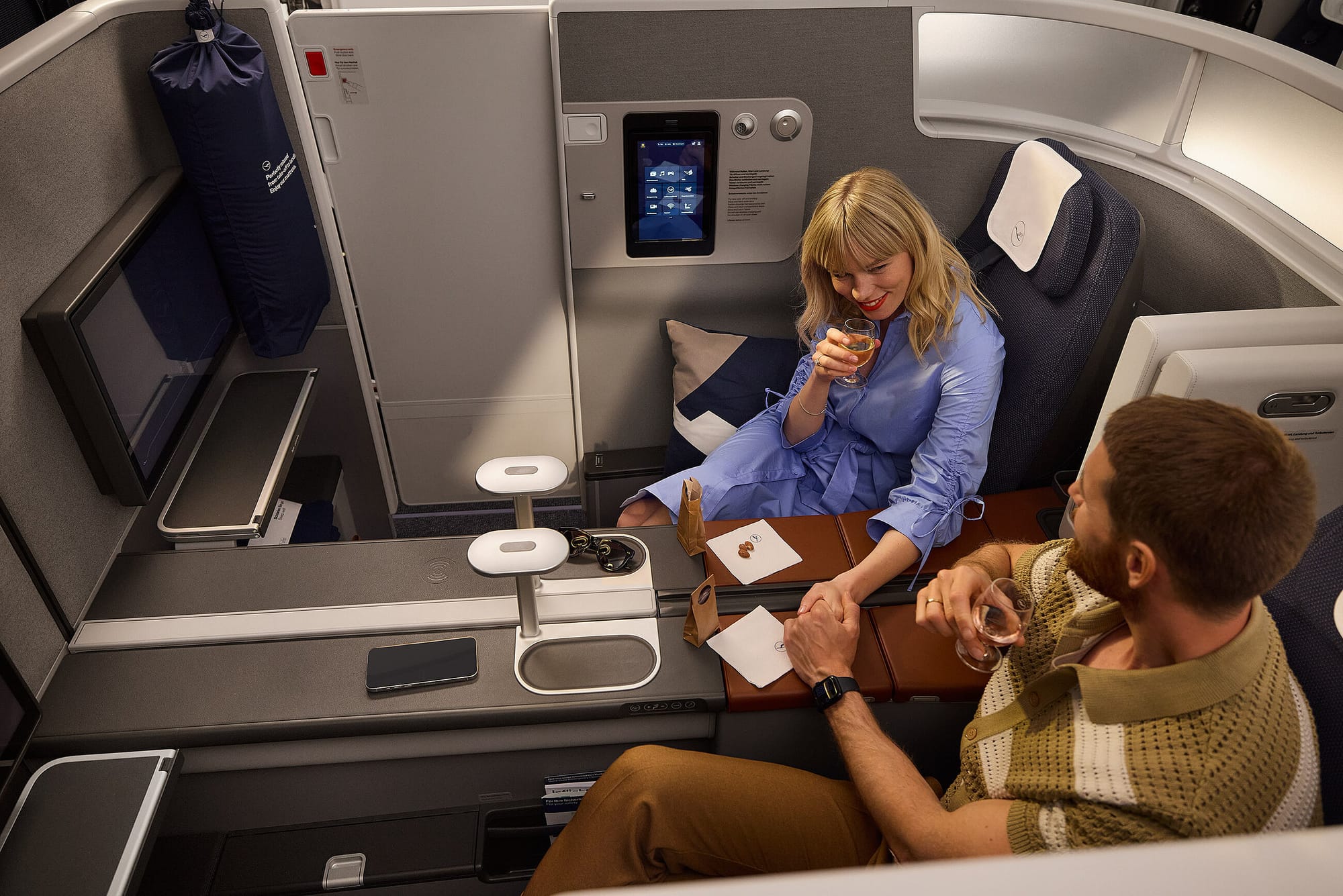
Worth explaining what certification means here, because the whole story runs on it. Before a seat can carry a paying passenger, a regulator has to approve it. In the US that's the FAA, in Europe it's EASA, and approval covers things like whether the seat holds together in a 16g impact and whether people can get out of the row in an evacuation. It applies to the specific seat, built by the specific manufacturer, installed in the specific aircraft type.
Which is where Lufthansa's structure becomes brutal. The 787 seats need FAA approval separately from the A350 seats, despite looking essentially identical, because they're a different product from a different manufacturer on a different airframe. On top of that, each seat variant needs approving individually.
What followed was a fleet of brand new Dreamliners sitting on the ground. At least thirteen completed 787s were reported parked awaiting certification at one point. When they finally entered service in October 2025 they flew with most business class seats blocked. By March 2026, 25 of 28 seats were cleared. Twenty-one joined the four already in service, leaving the full second row off limits.
Lufthansa Allegris
Nine years from press release to a finished cabin
And the last three seats still aren't cleared.
Announcement to first service
2017 to 2024
Seats still not cleared
On the 787-9, as of March 2026
Two separate problems compounded here. The 777X delay was Boeing's. The certification queue came from Lufthansa commissioning several bespoke seat variants, built by different manufacturers for different aircraft types, each needing approval on its own. Dates and figures as reported.
contrail.travel
There's more. Allegris doesn't fit the upper deck of Lufthansa's 747-8s because of the narrow nose, so two of those aircraft are getting a staggered arrangement with Allegris on one level and the old seats on the other. SWISS is introducing the same seats under the name Senses and reportedly has to install around 1.5 tons of ballast in the back of its A330s because the first class cabin is too heavy at the front.
None of that was caused by a delayed aircraft. It was caused by choosing a complicated product.
The hype arrived seven years early
SkyTrax is the outfit that hands out the airline star ratings you see in adverts, and in 2017 it gave Lufthansa five stars on the strength of the Allegris announcement. Not on the seat, which nobody had sat in. On the announcement. SkyTrax later revoked it.
I find that single fact more revealing than any of the delay numbers, because it shows what the announcement was actually for. It generated a rating and a competitive position years before a passenger could book the product. In the meantime Lufthansa kept taking delivery of aircraft with the old business class well into the 2020s, while competitors put comparable seats into service. United, El Al and Air France have all been flying products in the same class for a while.
So the announcement did its job and then the airline spent seven years living with the gap between what people expected and what it could sell.
What I actually object to
I review cabins for a living and this genuinely frustrates me, though not for the reason you might expect.
Delays on their own I can live with. Certification exists for good reasons, and a business class seat with a door and a privacy screen is a far more complex object than it looks. It's a piece of furniture that has to survive a crash, contain its own electronics, and let a stranger climb out of it in the dark. I'd rather that took longer than didn't happen.
What bothers me is the timing of the announcement relative to the product. An airline gets one moment of genuine attention for a new cabin, and burning it seven years ahead of the seat existing wastes it twice over. It wastes the launch, because by the time the seat arrives the coverage has already happened and the reaction is muted. And it wastes the wait, because every month between announcement and service is a month where the airline is being measured against a product it can't deliver.
A cabin announced eight months out would land differently. Coverage would arrive when people can act on it. Judgment would land on a seat that exists. And the announcement would be a launch rather than a promise.
Both things are true
To answer my own question, which I started out genuinely unsure about.
Airlines are hyping too early, and the reason isn't vanity so much as planning. Cabin programs get announced when they're committed internally, which is years before they fly, and once an airline has committed the money it has an interest in the market knowing.
And they are getting caught out afterward. The 777X delay is Boeing's, the certification queue is a regulator's, and the supply chain is nobody's in particular. Boeing delivered four 787s in August, down from ten in July and thirteen in June, and it wasn't clear from the reporting what caused the dip. An airline can't plan around a month like that.
Where those two things meet is the problem. Announcing early is a bet that the schedule holds, and no widebody schedule has held in a decade. So every announcement made on that assumption is a promise the airline may not get to keep.
I don't think airlines will stop announcing early, because the incentives all point the other way. But I'd like a bit more honesty in how it's framed. Say the seat is coming in 2028 rather than implying next year. Put the aircraft and the certification dependency in the release. Anyone who reads this closely enough to care will respect it more, and the airline stops writing checks against a delivery date that was never in its control.
Allegris will be a genuinely good product when it's fully in service. It will also have taken longer to arrive than I've been in this industry.


