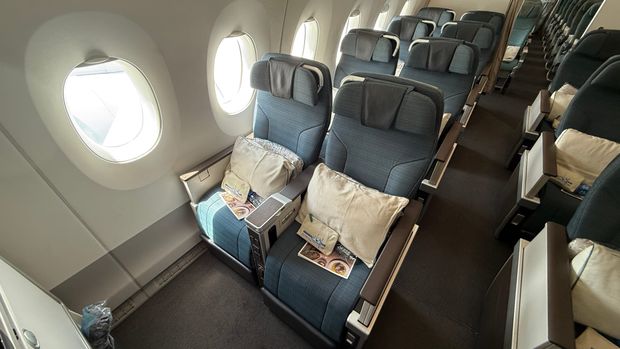
Premium economy is the cabin most travelers have heard of and few have sat in. It sits between coach and business class, usually costs two to three times an economy fare, and airlines describe it in language vague enough to be useless. What you're actually buying depends heavily on which airline you pick.
Cabin comparison
What the Upgrade Actually Buys
Ranges are typical across long-haul carriers. Exact pitch and width vary by airline and aircraft, so check a seat map for your flight.
Contrail
What It Is
A separate cabin, typically four to seven rows, with wider seats than economy and several more inches of legroom. The seat reclines further and often has a leg rest, though it doesn't lie flat. You'll usually get a better meal, a real amenity kit on some airlines, earlier boarding and an extra checked bag.
What it isn't is a small business class. You're still sitting upright for the whole flight, and on most airlines the difference in sleep quality between premium economy and coach is modest.
What You're Really Paying For
Three things, in order of how much they matter.
Space. An extra four to seven inches of legroom and a seat two to four inches wider. Over a ten-hour flight, that's the difference you'll feel most.
A quieter cabin. Fewer rows, fewer people and no families with infants in bassinet rows, since those are usually up front in economy.
The ground stuff. Priority boarding, an extra bag, faster check-in on some carriers. Worth something, though rarely worth the fare gap on its own.
Where It's Genuinely Good
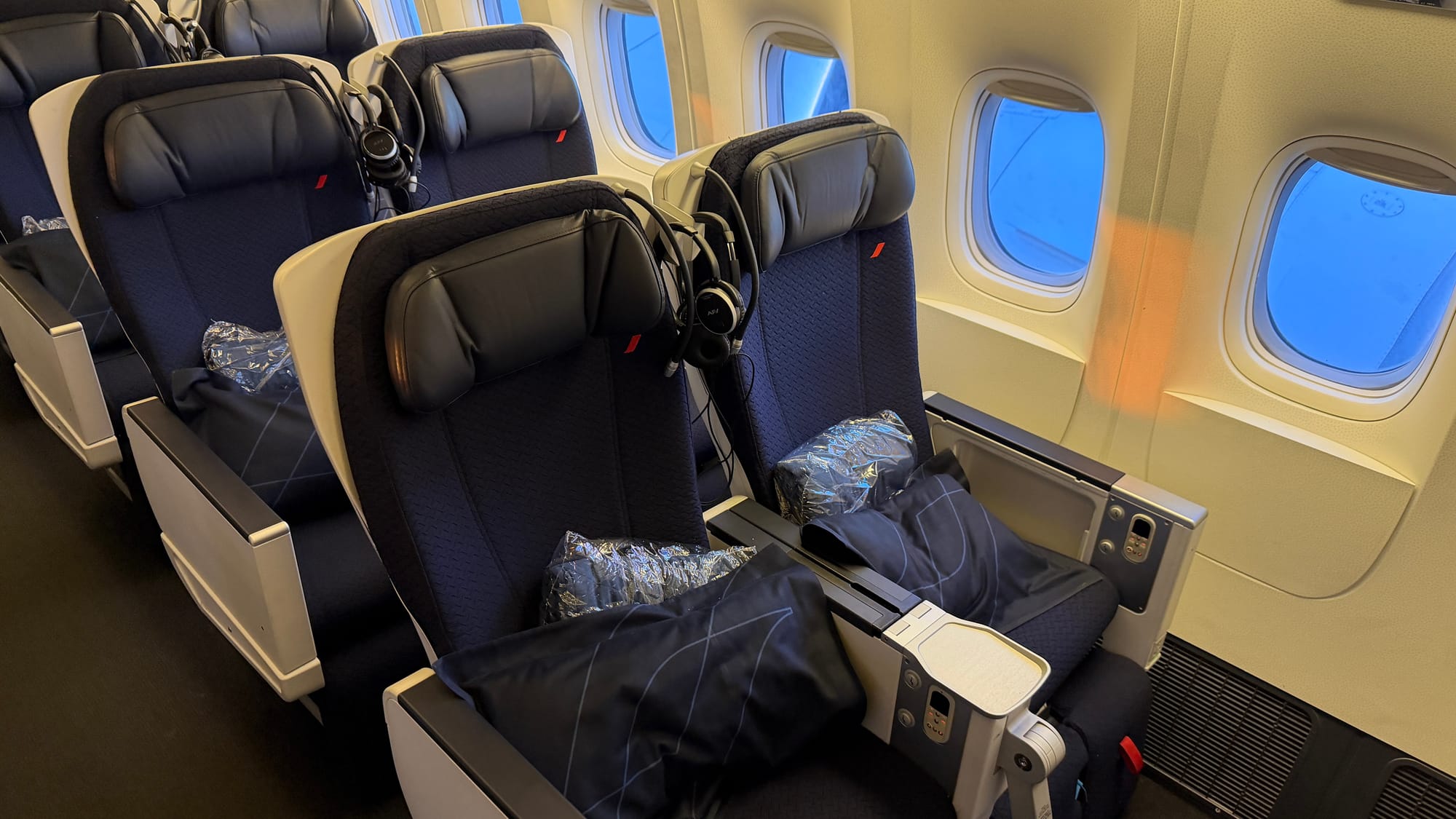
Quality varies more in this cabin than in any other. Some airlines built premium economy from scratch with its own seat, its own catering and its own crew service flow. Others simply blocked off the front rows of coach, added a few inches and charged double.
The tell is the seat itself. If it's a distinct seat with a fixed shell, a leg rest and a wider frame, the airline invested. If it looks like an economy seat with extra space around it, you're paying mostly for legroom.
When It's Worth Paying
- Flights over about eight hours. Below that, the extra space is a luxury rather than a difference in how you arrive.
- When you're working or need to arrive functional. The tray table and space make a laptop usable in a way economy doesn't allow.
- When the fare gap is under about double coach. Above that, price business class before you commit, since sale fares can land closer than you'd expect.
- When you're tall. This is the single biggest factor nobody accounts for, and it changes the math completely.
When to Skip It
Daytime flights under eight hours, routes where an exit row costs a fraction of the upgrade, and any airline whose premium economy is just economy with legroom. Check a seat map before booking. If the cabin has the same seat layout as economy behind it, you're buying space and not much else.