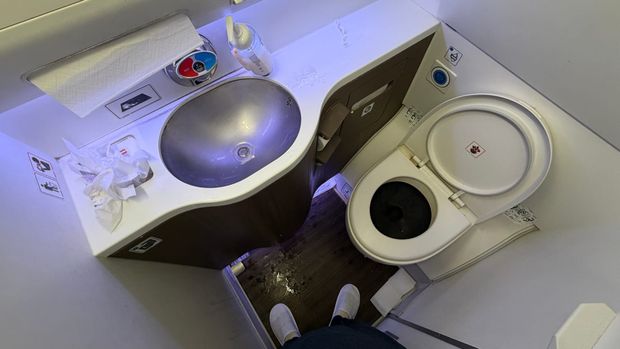
Few things onboard generate more confident misinformation than the toilet. People believe waste gets released over the countryside, that the blue liquid is what breaks it down, and that the roar when you press the button is the sound of it being sucked out of the plane. None of that is true, and what actually happens is more interesting.
Myth vs reality
How Airplane Toilets Work
Waste is released in flight
The blue liquid breaks it down
The flush noise is suction to the outside
A smell means a full tank
The tank stays sealed until a truck drains it on the ground
Modern vacuum toilets use very little of it, and mainly for sanitizing
It's cabin air rushing through the waste line
It usually means a leaking seal or a servicing error
Contrail
The Vacuum, Not the Water
Your toilet at home uses gravity and several liters of water. That wouldn't work well on a plane, where every liter weighs money in fuel and the whole thing tips backward on climb out.
Instead, aircraft use a vacuum system. The cabin is pressurized while the outside air is thin, and that pressure difference does the work. Press the button and a valve opens onto a pipe held at lower pressure, and the contents get pulled along the line into a sealed tank toward the rear of the aircraft. Almost no water is involved, just a small rinse of the bowl and a nonstick coating that helps everything slide.
That's also the reason for the noise. What you hear is air rushing through the pipe, which is much louder than water and gives the impression of something being expelled from the plane.
Where It Goes
Nowhere, until the plane lands.
The tank stays sealed for the whole flight. On the ground, a service truck connects to a panel on the fuselage and drains the tank. It then gets rinsed and given a measured dose of disinfectant to keep odor down between flights. A long-haul widebody can carry several hundred gallons of capacity, which is why the system copes with a full flight to Asia without anyone noticing.
The famous blue liquid is largely a thing of the past. It belonged to the older chemical toilets, where fluid in the bowl did the work of masking and breaking down waste. Modern vacuum systems use much less of it, and what's added at servicing is mainly to keep the tank sanitary.
So What Is Blue Ice?
There's one narrow case where waste does leave an aircraft in flight, and it's a maintenance failure rather than anything intentional.
If a seal on the external service panel leaks, a small amount of fluid can escape into the airstream and freeze onto the outside of the aircraft. The industry calls this blue ice, after the color the disinfectant used to be. It can break away as the plane descends and warms up, which is the origin of every news story about something unpleasant falling out of the sky. It's rare, and it's a problem crews can't do anything about from the cockpit.
Why You Can Sometimes Smell It Anyway
A sealed system should give off no odor at all, so if you can smell one, something is wrong. Usually it's one of two things: a leaking seal or joint in the waste line, letting odor into the cabin through the floor or sidewalls, or a servicing error where a tank was emptied without being properly rinsed and recharged.
The smell spreads because cabin air moves downward from the ceiling and toward the rear before it's filtered and recirculated. On a small regional jet there isn't much distance for anything to dissipate, so an odor at the back can reach the cockpit within minutes.
If it happens on your flight, tell a flight attendant rather than putting up with it. A sewage smell isn't dangerous, and it's a different thing from what crews call a fume event, where engine oil or hydraulic fluid gets into the air supply and produces a burning or oily smell that can make people ill. Crews treat every unexplained smell as a possible fume event until they've identified it, which is why a leaking toilet gets reported to the flight deck and not just noted for the cleaners.
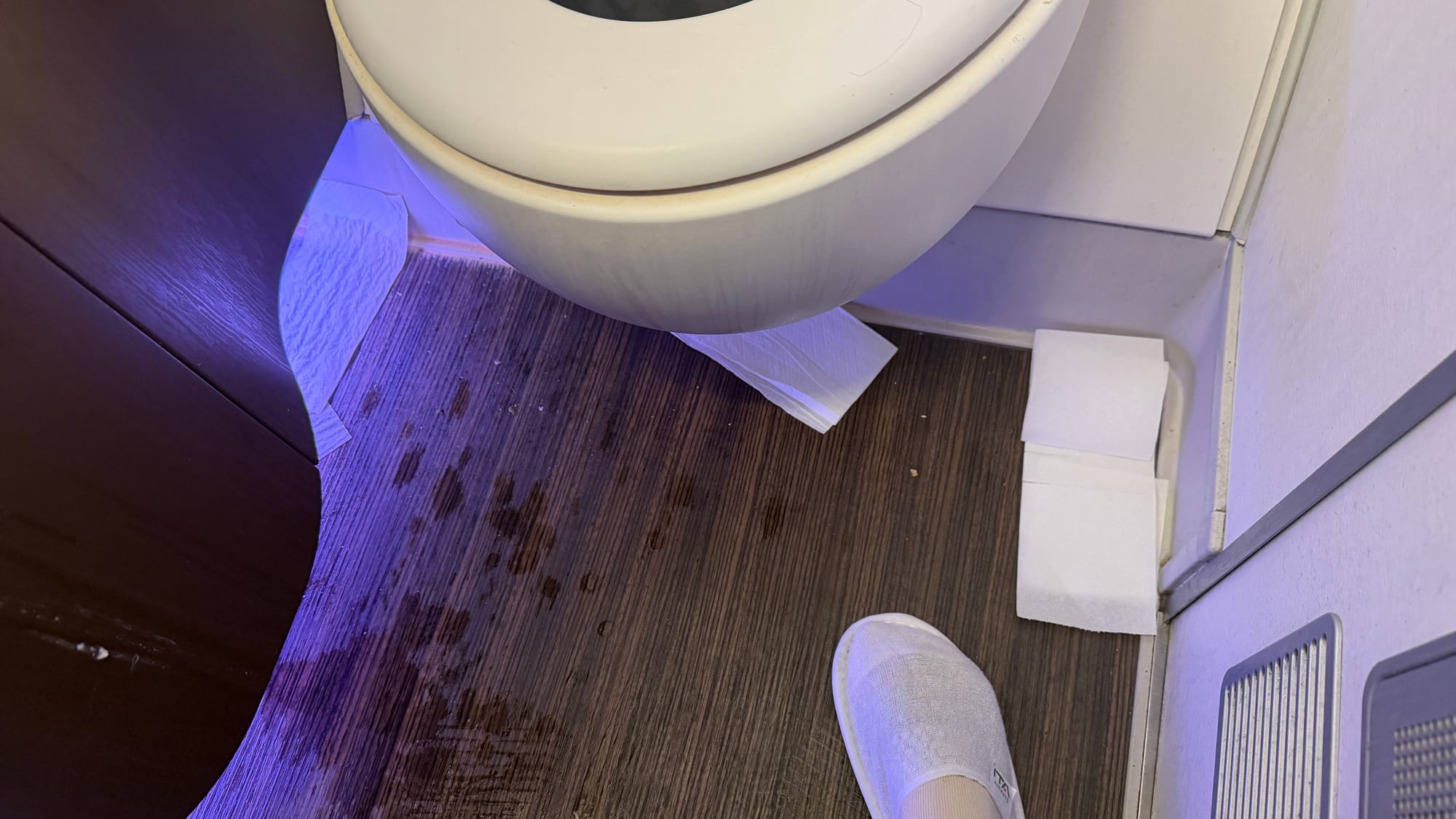
The Job Nobody Thinks About
Somebody has to empty all of this in every kind of weather, usually in the 40 minutes between one flight leaving and the next boarding. Lavatory servicing is one of the least pleasant jobs on the ramp and one of the most reliably done. The measure of how well it works is that most passengers have flown hundreds of times and never once thought about where any of it went.