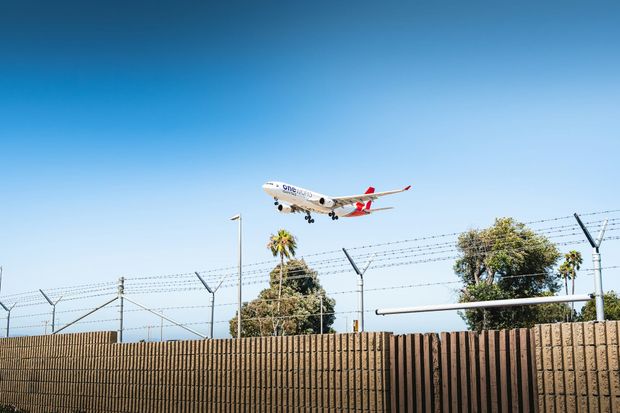
An earthquake near LAX rattled Los Angeles on Saturday morning, Nov. 28. It hit at about 9:30 a.m. Pacific time, offshore about 3.5 miles southwest of Manhattan Beach and just a few miles south of the airport's runways. The U.S. Geological Survey now puts it at magnitude 5.0, after first reading it as 5.2 and then 4.7. People felt it as far away as Venice and Silver Lake.
Latest Updates
Sat., Nov. 28, 3:00 p.m. ET: A magnitude 4.8 aftershock hit near Manhattan Beach at 11:41 a.m. Pacific time, according to the USGS, the strongest of several aftershocks so far. During the first quake, controllers reportedly told a Delta flight to abort its landing and climb away as a precaution. Mayor Karen Bass said there were no reports of major damage and urged people to prepare for more aftershocks.
Sat., Nov. 28, 1:50 p.m. ET: A former New York air traffic chief explains why debris like broken glass has to be cleared before planes can use runways and taxiways, and why that can mean delays. (See "What Happens at the Airport Now.")
Sat., Nov. 28, 1:18 p.m. ET: The USGS has revised the earthquake to magnitude 5.0. Windows were reportedly shattered at LAX, with crews sweeping up broken glass inside the airport. The airport hasn't confirmed the damage yet. The Los Angeles Fire Department said it had no initial reports of structural damage or injuries and is surveying the city from all 106 of its neighborhood fire stations. The National Tsunami Warning Center said there's no tsunami danger.
What Controllers Said
It came at a busy moment. Thanksgiving weekend is one of the heaviest travel stretches of the year, and LAX is one of the busiest airports in the country. Planes were lining up to land when the shaking started.
In audio shared on social media, controllers in the LAX tower reportedly told arriving pilots, "We just experienced an earthquake here," and described it as "pretty big." They kept clearing planes to land while they did it.
That might sound alarming, but a plane on final approach isn't touching the ground, so it doesn't feel an earthquake at all. The real question for controllers is whether the runways and the tower itself are still in good shape. That's why the warning matters: it tells pilots something happened on the ground so they can watch for anything unusual as they land.
What Happens at the Airport Now
After strong shaking, airports usually send crews out to inspect runways and taxiways for cracks or debris. Engineers also check terminals, jet bridges and the control tower. That can slow arrivals and departures for a while, even when nothing is wrong. When a magnitude 4.4 earthquake shook LA in 2024, LAX ran the same kind of runway checks.
My grandfather, Anthony Darienzo, ran air traffic control at New York Center and Republic Airport on Long Island during a 25-year FAA career. He says the runways and taxiways themselves belong to the airport manager, not the tower. "The airport manager is responsible for all the concrete at the airport," he told me. "How it affects airplanes and their movements is only tangential. Same as snow removal."
Broken glass and other debris are another story. "Debris must be removed because it can be ingested into engines and/or blow tires," he said. "So we might be confronted with delays while selected runways and taxiways are swept and clean."
Reports of broken windows at the airport make those checks more likely to take time. A magnitude 4.8 aftershock followed about two hours later, and each one can trigger another round of inspections.
If You're Flying Today
If you're flying in or out of LAX, Long Beach or other airports in the area today, delays are likely while crews finish their checks. Check your airline's app before you head out, and give yourself extra time at security, since the holiday crowds were already heavy.
LAX has had a busy few weeks. A Delta plane hit an Air Canada plane on the ground there recently, and I spoke with a former air traffic chief about Air France's wrong turn at LAX. I'll keep updating this story as LAX and the FAA share more.