
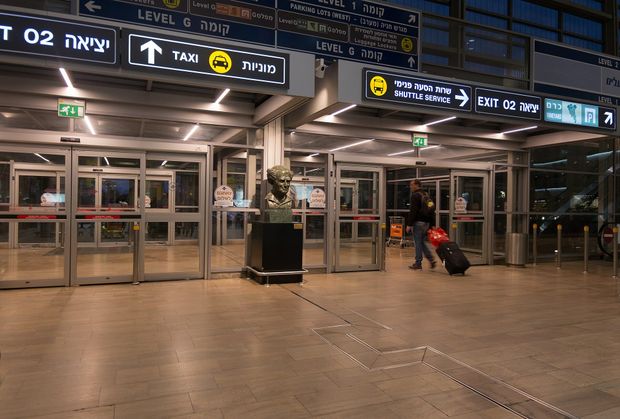
After months of suspensions, US airlines are beginning to return to Israel. Delta resumed daily flights between New York (JFK) and Tel Aviv (TLV) on September 6, followed by United Airlines' twice-daily Newark service two days later. American Airlines, however, has curiously pushed its return to 2027.
Flights to Israel
Which U.S. Airlines Are Back in Tel Aviv
Delta
United
American
Schedules can change quickly. Check with your airline before booking.
Contrail
Fares and Competition
The return of Delta and United is significant for passengers. Since the war with Iran began in February, travelers flying nonstop between the U.S. and Israel had been entirely dependent on Israeli carriers such as El Al and Arkia. The resulting lack of competition contributed to sharply higher fares, with some New York–Tel Aviv tickets reportedly exceeding $2,000 during the summer. The return of several major US carriers allows for more capacity and potentially greater competition on a route that has been severely disrupted since the escalation of regional conflict.
Safety Concerns
The restoration of flights to Tel Aviv has led to concerns about whether airlines have decided to reopen routes because conditions in the region have truly stabilized, or instead because the commercial pressure to restore lucrative routes has become too strong to ignore.
Yoram Elgrabli, Israel's tourism commissioner for North America, has claimed that U.S. carriers' decision to reopen is because "Israel is safe for tourists." Delta says its decision followed a "thorough review" of the regional security environment and that it will continue monitoring developments. Yet, the recent history of the route demonstrates how quickly circumstances can change. In 2025, United had resumed Tel Aviv service only to suspend it again after renewed regional conflict. Delta similarly withdrew its flights following the closure of Israeli airspace in February 2026.
American's decision to remain outside the market until 2027 provides an interesting parallel to its stateside competitors. Rather than treating the reopening of Ben Gurion as synonymous with a return to normality, the airline appears to be approaching reinvestment in flights to Israel with caution. As we pointed out in a prior Contrail article, the cycle of opening and closing routes comes at a large cost for airlines. Only time will tell if American's hesitancy pays off.

The Flydubai Incident
Recent events concerning flight security may further increase doubts about airlines reopening their routes to Israel. On September 30, a flydubai plane bound for Tel Aviv was forced to make an emergency landing after the flight's co-pilot allegedly stabbed the captain and tried to crash the plane, according to Israeli officials. Israeli authorities subsequently announced tighter security checks for pilots flying into the country. The incident is not evidence that commercial flights to Tel Aviv are inherently unsafe, but it certainly illustrates the extraordinary security environment in which airlines are now operating.
Watching passengers run toward the cockpit on flydubai FZ1073 gave me chills. The co-pilot allegedly attacked the captain mid-flight, and so many people stepped up. 🙏pic.twitter.com/ksDilaWzJX
— Zachary Benitez (@contrailzach) October 1, 2026
Looking Ahead
For passengers, U.S. carriers' return to delivering flights to Israel should mean cheaper fares, a wider choice of airline, and restored connectivity in time for the upcoming holiday season. For several U.S. airlines, their decision to reinvest is a complicated balance of risk and reward. Their choice to rejoin a lucrative market comes with accepting the possibility that another potential escalation in a volatile region could force them to withdraw again all too soon.


