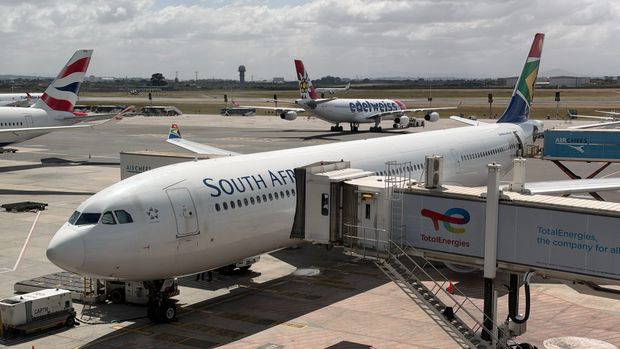
Is South African Airways going bankrupt? The airline says no, but its workers are being paid late for the second month in a row. SAA confirmed it's staggering October salaries, with most staff paid first and pilots, managers and executives reportedly paid by the end of the month, after September's pay also went out late. Its top spokesperson went on South African radio this week insisting that "SAA has a future" and that "everyone is getting paid." For now, flights are running as normal, and nothing suggests your ticket is at risk. But for an airline that already collapsed once in recent years, late paychecks are a warning sign worth understanding.
Why SAA Is Short on Cash
SAA blames forces outside its control. Mphilo Dlamini, the airline's chief corporate affairs officer, pointed to the Middle East war and high jet fuel prices, saying they've "raised a lot of costs for us, especially jet fuel." He also said running an airline in Africa costs about 17% more than the global average. According to Dlamini, the staggered pay was agreed with staff and unions as a trade-off to keep planes flying, not because the airline has run out of money.
Not everyone buys that explanation. The interviewer, Stephen Grootes, pointed out that if fuel were the whole story, South Africa's other two big airlines would be struggling to pay staff too, and they aren't. A transport economist on the same show argued SAA grew too quickly after coming out of business rescue, South Africa's version of bankruptcy protection.
How Worried Should You Be?
For travelers, the most important fact is that SAA is still flying its normal schedule, and no cancellations have been tied to the cash crunch. Staggered salaries are a sign of tight cash flow, not of an airline about to stop flying.
The bigger context is what makes people nervous. SAA went into business rescue in late 2019 and spent more than a year grounded before restarting flights in 2021 as a much smaller airline. In August, the government backed it with a R1 billion loan guarantee to help it borrow money for day-to-day costs. SAA says that isn't a bailout, since it's not a direct cash injection, but critics like the taxpayer group Outa have called it one in all but name. South Africa's parliament has also written to SAA asking for answers, and the airline has promised a full response.
If you have an SAA booking coming up, there's no reason to change it right now. If you're booking new trips, though, it's sensible to pay by credit card, which usually gives you a way to claim your money back if an airline stops flying, and to check whether your travel insurance covers airline failure. The things to watch over the coming weeks are whether salaries go out on time in November, whether unions start talking about strikes and whether SAA starts trimming routes. Any of those would be a much bigger signal than a few days' delay in pay.