
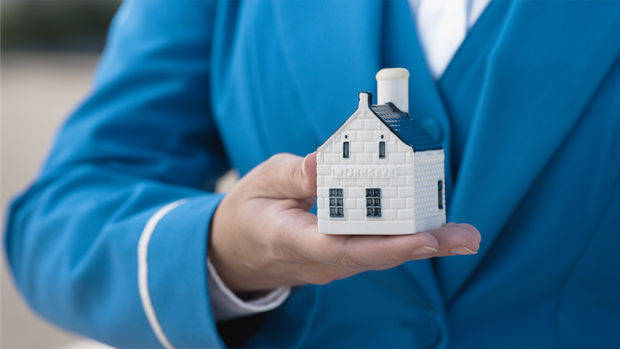
KLM turned 107 on October 7, and like every year on its birthday, it revealed a new Delft Blue house. KLM's Delft Blue houses are tiny blue-and-white ceramic copies of real Dutch buildings, filled with Dutch gin and handed out to business class passengers on long-haul flights. I've picked up four of them over the past year, I liked the gin inside every one, and I'll admit I now want the whole set. That last part is exactly why I think these little houses are the smartest marketing in the airline business.
Meet House No. 107
This year's house is Wijnhoeve De Kleine Schorre, a winery in the village of Dreischor in the Dutch province of Zeeland. The vineyard was founded in 2001, when plenty of people doubted you could make good wine in Zeeland's heavy clay soil. It has since become one of the best-known wineries in the Netherlands, and it has supplied wine to KLM for more than 20 years.
"For 107 years, KLM has connected the Netherlands with the world," KLM CEO Marjan Rintel said, calling the new house "a fitting symbol of our 107th anniversary."
October 7, 2026
KLM's Newest Delft Blue House
Wijnhoeve De Kleine Schorre
A winery in Dreischor, Zeeland, founded in 2001 and a KLM wine supplier for more than 20 years.
Contrail
The tradition goes back to the 1950s. As the story goes, industry rules at the time barred airlines from giving passengers gifts. KLM got around them by calling its little houses a final drink on the house rather than a gift, just served in a ceramic building instead of a glass. Since 1994, KLM has released one new house every year on October 7, its founding date, and each house's number matches the airline's age. Today's is No. 107.
Your Shelf Does the Advertising
Most airline perks disappear the moment you land. A good meal, a comfortable bed and a friendly crew all live on only in your memory. A Delft Blue house comes home with you and sits on a shelf for years.
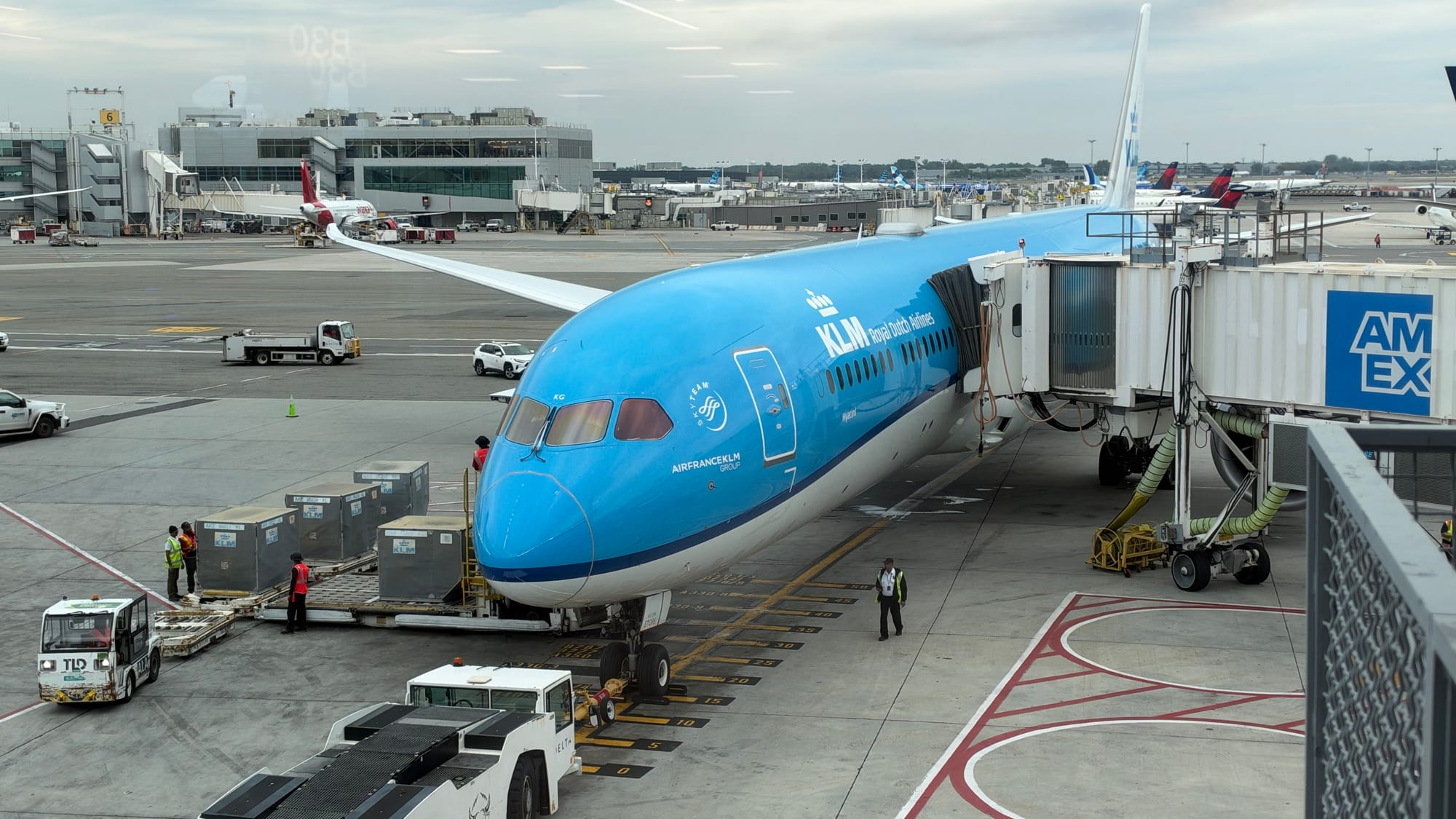
That turns every passenger into a KLM billboard. Friends see it and ask about it, and suddenly you're telling them about your business class flight to Amsterdam. I've always believed the best marketing is getting your customers to do it for you, because people trust a friend's story far more than any ad, and KLM figured that out decades before anyone called it word of mouth.
It also helps that the houses are genuinely beautiful. Nobody hides a pretty little canal house in a drawer, so it stays out where people will see it.
The Game You Can't Stop Playing
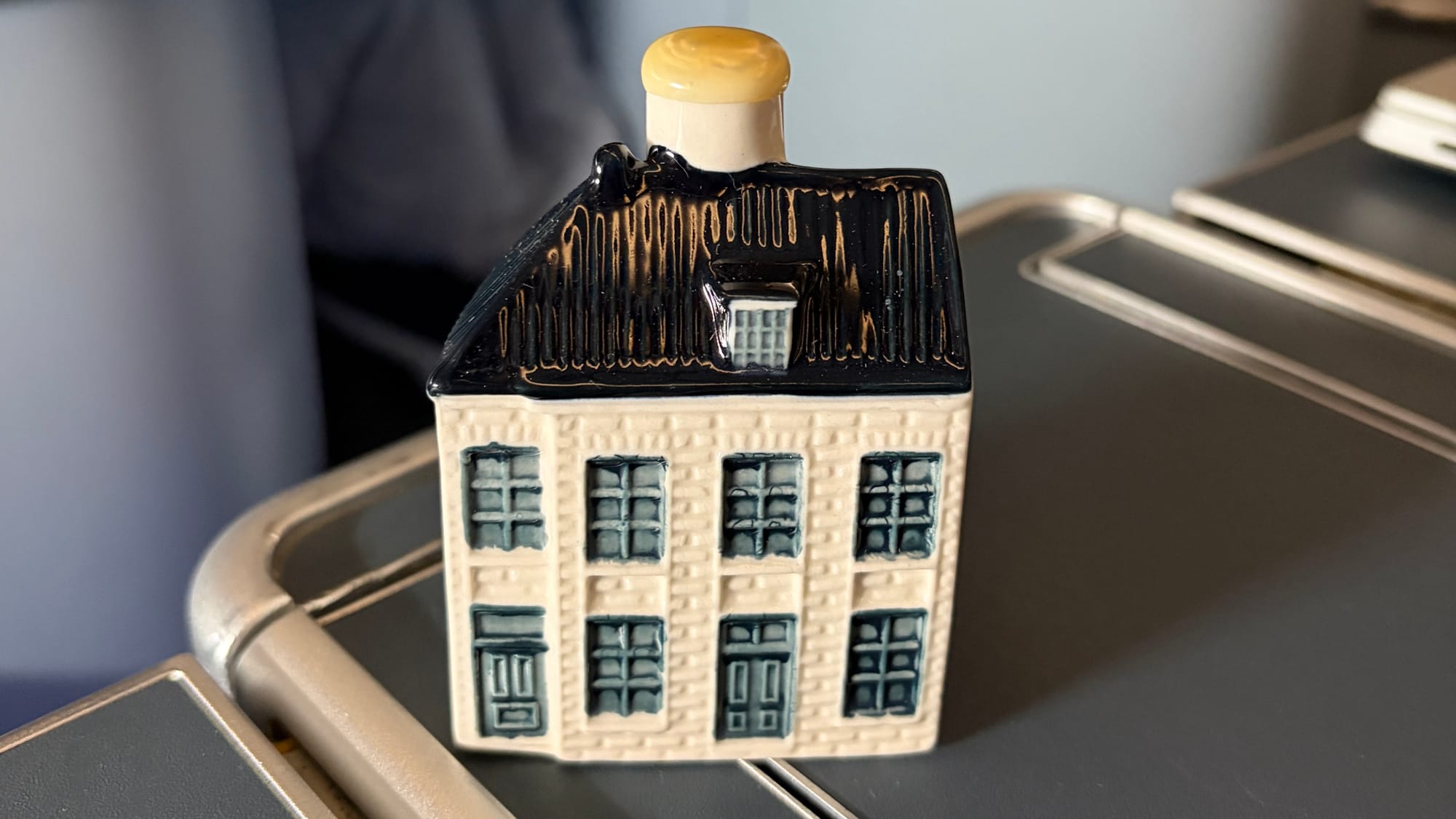
The second trick is even smarter. Because every house is numbered, getting one makes you wonder about the rest. Getting four makes you want them all.
That's gamification, the same idea behind trading cards and video game achievements, and it works on me without question. Each new flight in KLM business class turns into a chance to add to my collection, which gives me a reason to choose KLM over another airline flying the same route. A loyalty program does the same thing with points, but points are invisible. A row of tiny houses on a shelf shows you exactly how far you've gotten and how far you have left to go.
Collectors take it seriously too. There are websites that track every house, resale listings for the ones people are missing, and rare editions given only to people like royalty and newlyweds that reportedly sell for thousands of euros.
Why Other Airlines Should Pay Attention
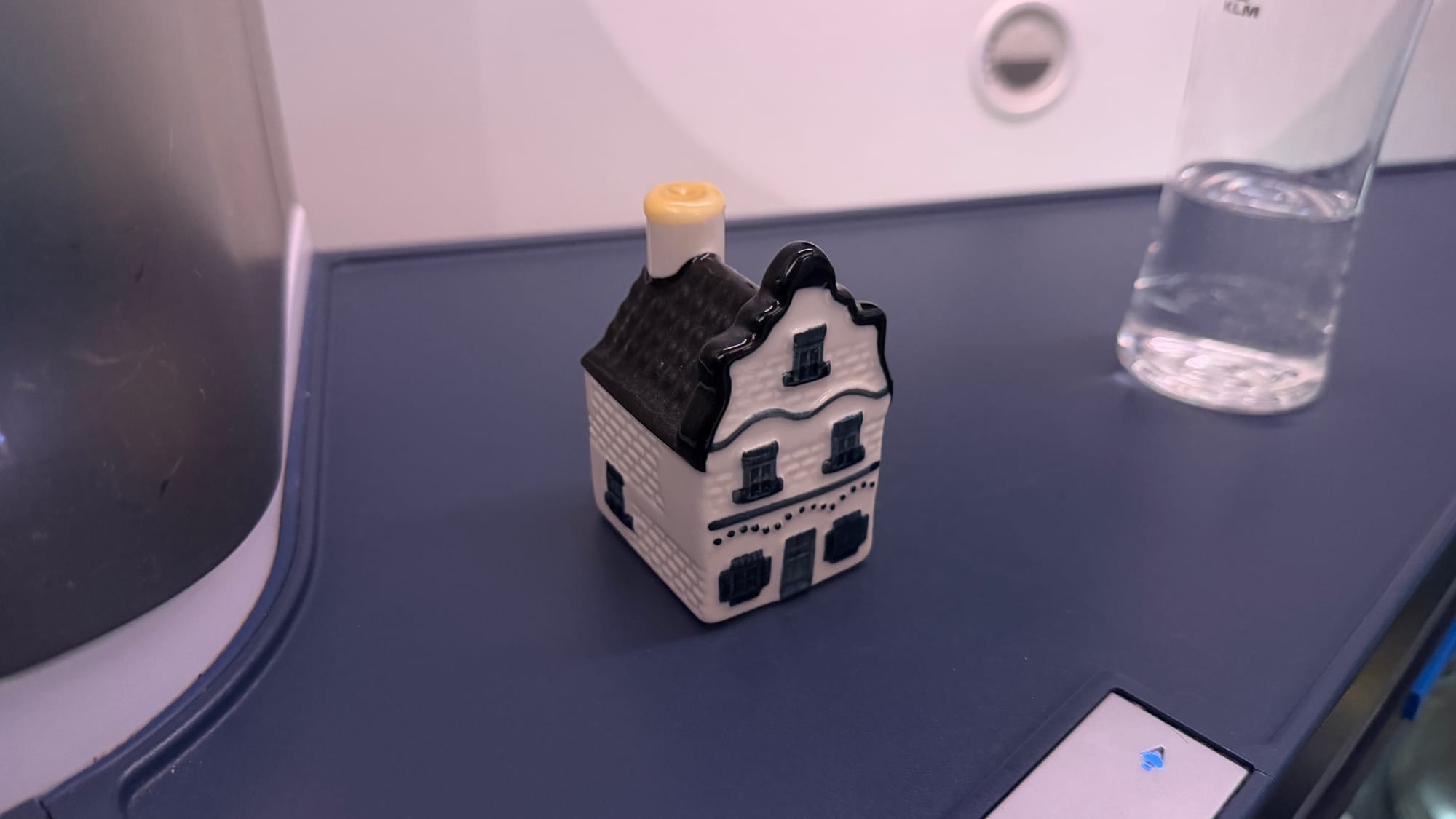
Plenty of airlines hand out amenity kits, and most of them end up in a drawer or the trash. KLM found something people actually want to keep, display and complete, and it has kept the tradition going for more than 70 years without losing its charm.
The cost of a small ceramic house is tiny next to what an airline pays to win a business class passenger. If one of those houses ends up on a shelf, starts a conversation and makes someone choose KLM for their next trip, it may be the best money the airline spends all year. As for me, I'm four down, and I'll be looking for No. 107 on my next KLM flight.


