Severe turbulence forced an Avianca flight from Medellín, Colombia, to New York's JFK Airport to divert to Miami early Friday, and at least eight people were taken to the hospital. The plane landed at Miami International Airport around 3:30 a.m., where Miami-Dade Fire Rescue said it treated multiple people injured by turbulence.
Video from the cabin appears to show passengers holding ice packs to their heads while being told to keep their seatbelts fastened. Local reporters at the hospital said a flight attendant in uniform and a woman in a neck brace were among those brought in on stretchers. Avianca hasn't said what caused the turbulence, and the extent of the injuries isn't yet known.
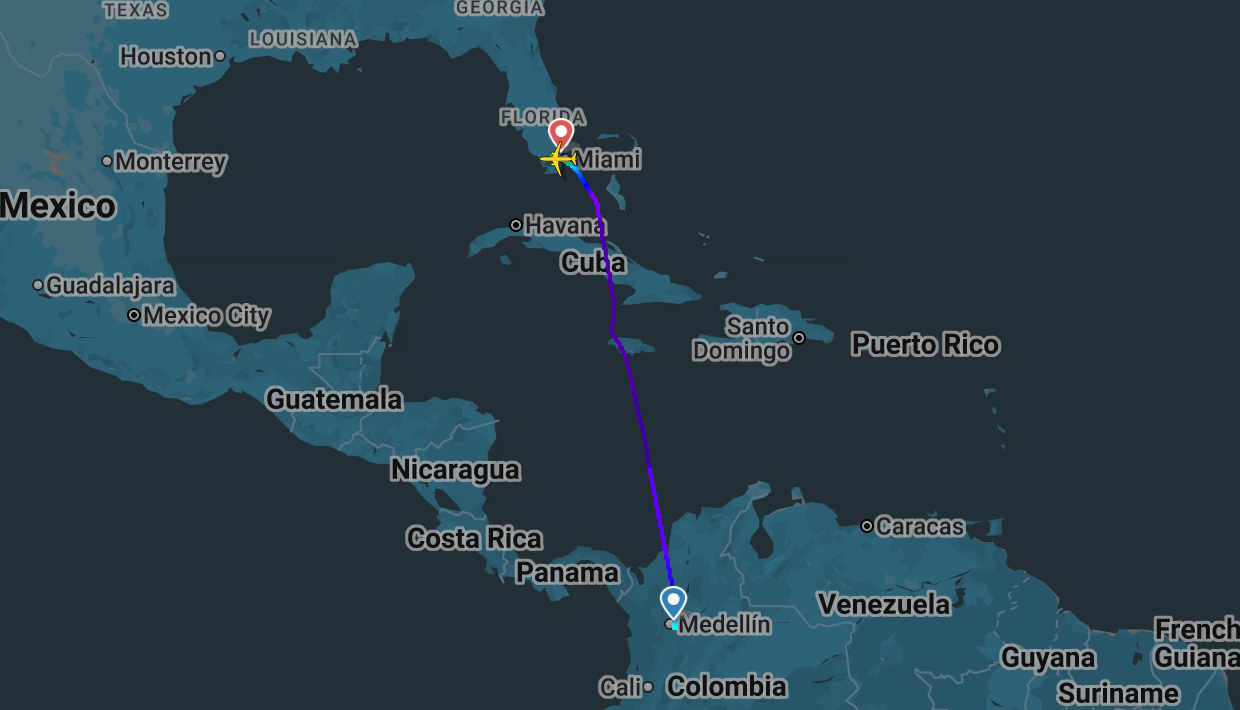
It's the kind of story that makes nervous flyers even more nervous. So how does a bumpy ride end with people in the hospital?
Turbulence
When a Bumpy Flight Turns Dangerous
More than a third of US airline accidents from 2009 to 2018 involved turbulence
of serious turbulence injuries on US flights were crew members
rise in severe clear-air turbulence over the North Atlantic since 1979
Contrail
What Turbulence Is
Turbulence is simply rough, uneven air. A plane flying through it gets pushed up, down and sideways, the same way a boat rocks on choppy water.
Most of the time, it's mild and you'll barely spill your drink. It comes from a few main sources:
- Storms. Thunderstorms churn the air around them, and pilots steer well clear of them when they can.
- Mountains. Wind flowing over mountain ranges can create waves of rough air far above the peaks.
- Clear-air turbulence. This is the tricky one. It happens in clear skies, often near the jet stream, the fast-moving river of wind high in the atmosphere. Because there are no clouds, pilots can't see it, and weather radar can't detect it.
Why People Get Hurt
The plane itself is rarely in danger. Commercial jets are built to handle forces far stronger than anything turbulence usually throws at them, and the NTSB found that most turbulence accidents leave the aircraft completely undamaged.
People are a different story. When a plane drops suddenly, anyone who isn't strapped in keeps moving, and they can hit the ceiling, the overhead bins or the seat in front of them. Loose items like laptops, carts and coffee pots become projectiles too.
That's why turbulence is one of the most common causes of serious injuries in commercial flying. The NTSB found that turbulence played a part in more than a third of accidents on major US airlines between 2009 and 2018.

The Risk for Crews
The people most at risk aren't passengers at all. Flight attendants spend much of the flight standing in the aisles, serving meals and pushing carts, which leaves them exposed when the air turns rough without warning.
According to FAA figures, crew members accounted for 116 of the 146 serious turbulence injuries recorded on US flights from 2009 to 2021, or about 79%. When you see a flight attendant on a stretcher after a story like this one, it's sadly the norm, not the exception.
Is It Getting Worse?
There's also evidence that rough air is becoming more common. A 2023 study from the University of Reading found that severe clear-air turbulence over the North Atlantic, one of the busiest flight corridors in the world, increased by 55% between 1979 and 2020. The researchers linked it to climate change, which is strengthening wind shear in the jet stream.
The most serious recent case came in 2024, when a Singapore Airlines flight from London hit extreme turbulence over Myanmar. One passenger died, dozens were injured, and investigators found the plane dropped about 178 feet in under five seconds.
How to Stay Safe
The good news is that the biggest thing you can do to stay safe is very simple.
- Keep your seatbelt on whenever you're seated, even when the sign is off. It can be loose and comfortable, but it should be fastened. Most serious passenger injuries happen to people who weren't buckled in.
- Listen to the crew. When the seatbelt sign comes on, sit down quickly and buckle up, and save the bathroom trip for later.
- Stow heavy things. Keep laptops and bags under the seat in front of you or in the overhead bin, not loose on your tray table.
- Buckle in children properly. The FAA recommends that young children fly in an approved child safety seat rather than on a parent's lap.
Turbulence can't always be predicted, and flights like this one are a reminder that it can turn dangerous quickly. But for passengers, the fix is almost always the same one-second habit: keep that belt on.