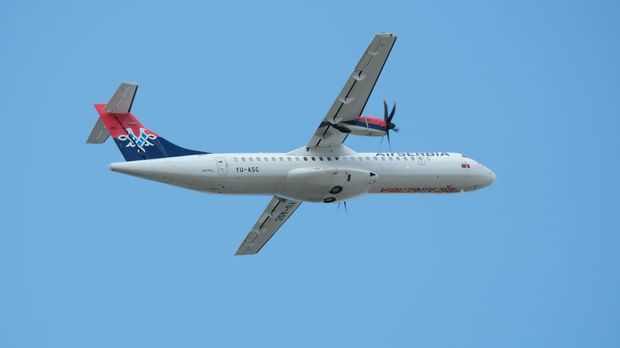
Belgrade to Podgorica is about 380 kilometers. It's under an hour in the air. This winter it will have 45 weekly departures, because Air Serbia and Air Montenegro have spent the last few weeks answering each other's schedule filings like a game of poker nobody wants to fold.
Add Belgrade to Tivat and the two countries will be linked by 76 weekly flights from October 25, when the winter season starts. That's roughly eleven departures a day between Serbia and Montenegro, in the off season, on routes short enough that the seatbelt sign barely goes off.
I love this. Let me explain how it happened.
The escalation, in order
It started with Air Montenegro filing 14 weekly flights between Podgorica and Belgrade. Air Serbia then boosted its own Podgorica service to four daily from Monday through Saturday, reaching 27 weekly.
Montenegro's carrier came back with 18, up from the 14 it had filed. That includes three daily services on Mondays, Thursdays, Fridays and Sundays.
Meanwhile on Tivat, Air Montenegro had already gone from seven weekly last winter to ten this year. Air Serbia responded by adding another daily flight, taking its own total to 21. According to EX-YU Aviation News, which has been tracking every move, Air Montenegro is considering pushing Tivat higher still.
So the tally as it stands: 45 weekly between Belgrade and Podgorica, 31 between Belgrade and Tivat. Neither airline has said it's done.
Winter 2026/27 · from October 25
Seventy-six weekly flights, two countries
Both carriers have raised frequencies more than once this month. Neither has said it's finished.
Passengers, 2025
Both routes combined, up 6.6% on 2024
Belgrade – Podgorica
Up 9.4%. Busiest route within the former Yugoslav markets
Belgrade – Tivat
Up 3.7%. Tivat's largest market, ahead of Tel Aviv
Frequencies for the season beginning 25 October 2026. Passenger figures are full-year 2025. Reporting by EX-YU Aviation News. Montenegro's population is around 620,000.
contrail.travel
The strange part is that the demand is real
This looks like two small carriers losing their minds, and then you look at the passenger numbers.
Those two routes carried a combined 685,316 passengers in 2025, up 6.6% on the year before. Belgrade to Podgorica alone did 356,896 and grew 9.4%, making it the busiest route within the former Yugoslav markets. Belgrade to Tivat handled 328,420.
For scale, Belgrade was Podgorica's single busiest route last year. Istanbul came second at 290,827. It was also Tivat's largest market, ahead of Tel Aviv at 201,531.
Montenegro has a population of about 620,000. Between them, those two airports moved over a million passengers to and from Belgrade last year, which is a ratio I had to check twice.
Why a short flight beats the alternative
Geography and paperwork explain why this corridor works so hard.
The terrain between Belgrade and the Montenegrin coast is mountainous, which makes fast rail expensive to the point of implausibility and keeps road journeys long. Then you hit the border, a real crossing with real queues. Add both together and a flight of under an hour becomes the only way to do Belgrade to Podgorica and back in a working day.
Then there are the family and property connections that survived the breakup of Yugoslavia. People go back and forth year round for reasons that have nothing to do with holidays, which is why the winter numbers hold up on a route you'd assume was seasonal. Summer adds tourists on top.
The two airlines aren't fighting the same fight
The asymmetry is what makes this more interesting than a straight capacity race.
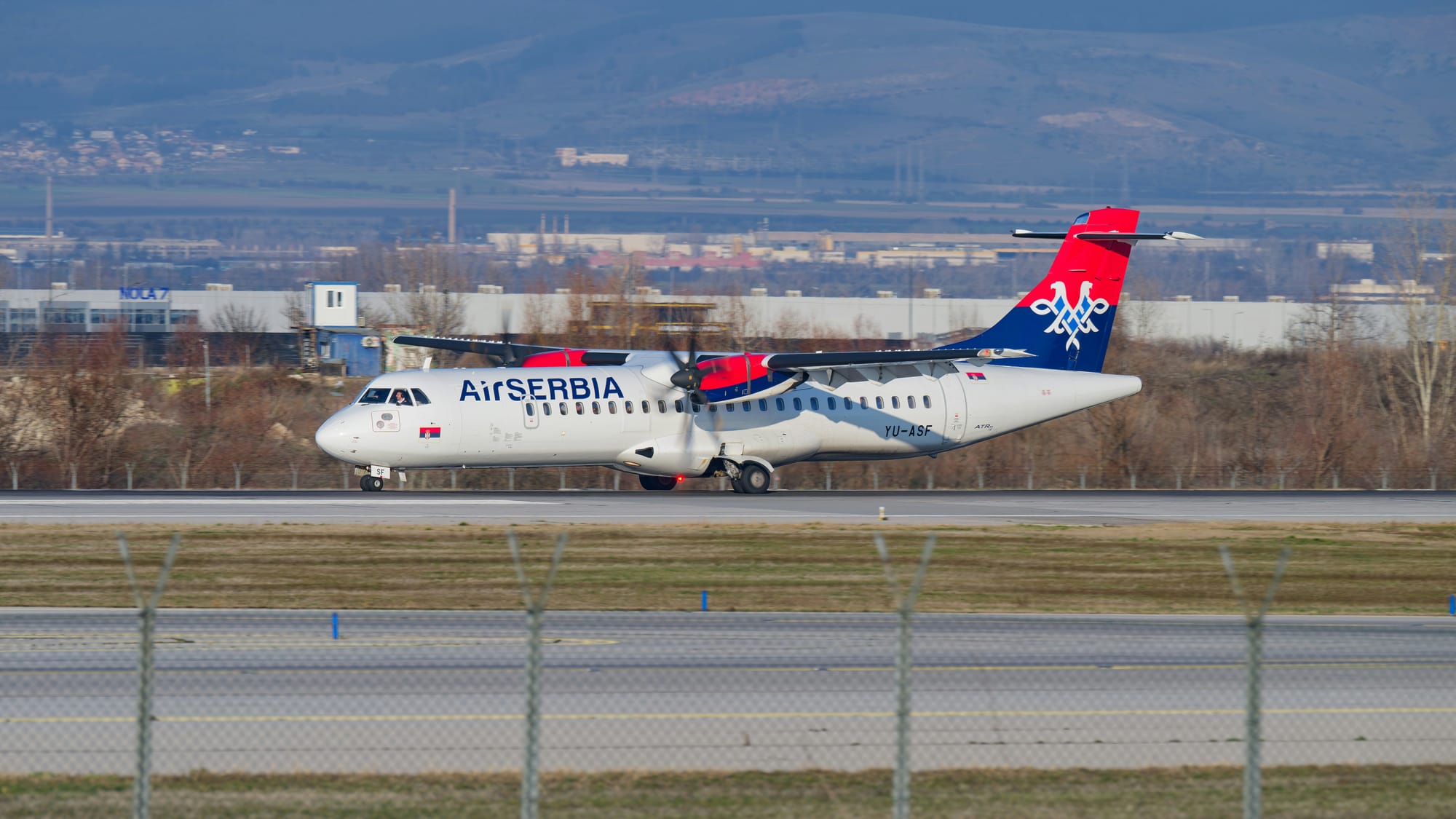
Belgrade is run as a connecting hub by Air Serbia, with a fleet that reached a record 40 aircraft this year. Its frequencies are designed to feed onward flights to New York, Chicago, Toronto and Shanghai among others. A passenger from Podgorica isn't only going to Belgrade. Quite a few are going through it.
Podgorica isn't a transfer hub, and Air Montenegro sells the flight rather than the connection. So Belgrade is close to its whole game on this corridor, which explains why it keeps matching Air Serbia move for move. It can't afford to lose the one route that carries it.
There's a fleet difference too. The Serbian carrier has been buying ATR 72-600 turboprops precisely so it can run high frequencies on short routes without flying half-empty jets. On a sub-hour sector with jet fuel around $171 a barrel, that's a structural advantage rather than a preference.
The context nobody is mentioning
Now hold this up against what the rest of the industry is doing.
Turkish Airlines is further reducing its ex-Yugoslav operations this winter. LOT is cutting its ex-Yugoslav flying by around 40%. IATA has halved its 2026 industry profit forecast. Ryanair has trimmed growth plans to reduce fuel exposure.
Two carriers with a combined footprint smaller than a single European major are adding frequencies into a winter that everyone else is retreating from. Either they know something about this specific corridor that the majors don't, which is entirely possible given the numbers above, or somebody is going to spend a cold January flying a lot of empty seats.
My guess is the first one, at least for Air Serbia. The route data supports the capacity and the turboprops make the economics work. Air Montenegro is the one taking the real risk, and it's taking it because the alternative is conceding the only market it has.
Either way, 76 weekly flights over 380 kilometers in the dead of winter is a genuinely absurd number, and I mean that as a compliment.