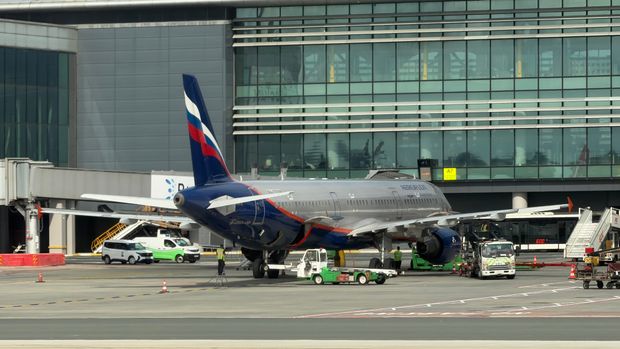
Aeroflot's new flights to Phu Quoc take off Thursday, connecting Moscow with one of Vietnam's most popular beach islands twice a week on an Airbus A330. It's the Russian flag carrier's third destination in Vietnam, after Ho Chi Minh City and Nha Trang.
The timing is awkward. A week ago, Russia's transport minister said Moscow had asked Vietnam to lease it passenger jets, complete with crews and maintenance, because Russian airlines are running short of planes that can fly.
Aeroflot · Russia
New Beach Route, Fewer Planes
Contrail
Why Russia Needs Planes
Before Russia invaded Ukraine in 2022, about 850 of the roughly 900 commercial aircraft its airlines flew were Boeing and Airbus jets, and most were leased from Western companies. When sanctions hit, Russia passed a law letting its airlines re-register more than 400 of those leased planes at home and keep flying them, according to Euronews. The leasing companies have since filed about $8 billion in insurance claims.

Keeping those jets in the air is getting harder. Western manufacturers can't sell Russia parts, so airlines have been taking parts from some planes to keep others flying. Russia's aviation authority certifies those parts itself, but US and European regulators don't recognize them.
The result is a growing number of parked planes. Of 673 aircraft flown by Russia's 11 largest airlines, 130 aren't in service, nearly a fifth, compared with a normal rate of about 10%. The picture is better inside the Aeroflot group than at smaller Russian airlines, where close to a third of planes are idle.
The Russian Jet That Isn't Ready
Russia's long-term answer is to build its own planes. Last month, Aeroflot ordered 90 more Yakovlev MC-21s, a Russian-built narrowbody, bringing its total commitment to 108. But not a single MC-21 is carrying paying passengers yet. Replacing Western parts with Russian ones added weight and cost, and deliveries to Aeroflot aren't expected to begin until the second half of 2027.
That's why Moscow is knocking on doors abroad. Vietnam is studying the leasing request, but its main airline flies only Airbus and Boeing jets, so lending them to Russia could expose Vietnam to sanctions. Ethiopia turned down a similar proposal for that reason.
Why Beach Routes Keep Coming
If planes are scarce, why add a new route to Phu Quoc? Because that's where the demand is. Aeroflot's domestic traffic fell 9.1% in June, as Ukrainian drone strikes disrupted flights at home, while its international traffic jumped 13.9%. With Europe and North America closed to it, the airline has been leaning into places Russians can still easily visit, from Vietnam and Sri Lanka to the Seychelles and the UAE.
Travel between the two countries is getting easier in the other direction too. Starting Thursday, Vietnamese citizens can visit Russia without a visa for up to 30 days, and flights between Russia and Nha Trang, Vietnam's other big beach destination, have been running close to full.
Fuel is another squeeze. Ukrainian strikes on Russian refineries have cut production, and some Russian airports have reportedly rationed jet fuel. Aeroflot says its own fuel supply is secure.

What It Means for Travelers
For most American travelers, nothing changes directly. Russian airlines have been banned from US and European Union airspace since 2022, and Moscow's requests to restore direct flights to the US haven't produced any so far.
If you're heading to Vietnam this winter, though, don't be surprised to see Aeroflot jets at Phu Quoc, Nha Trang or Ho Chi Minh City. For a country short on working planes, Russia is choosing very carefully where to send the ones it has left, and right now that means the beach.