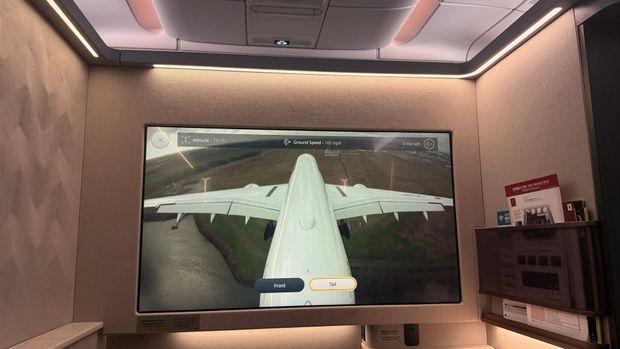
When passengers get bored on a long-haul flight — or really any flight — they often tap on their entertainment screens and put on a movie or TV show. Yet, some planes have a hidden feature deep inside these screens that passengers often overlook: external cameras.
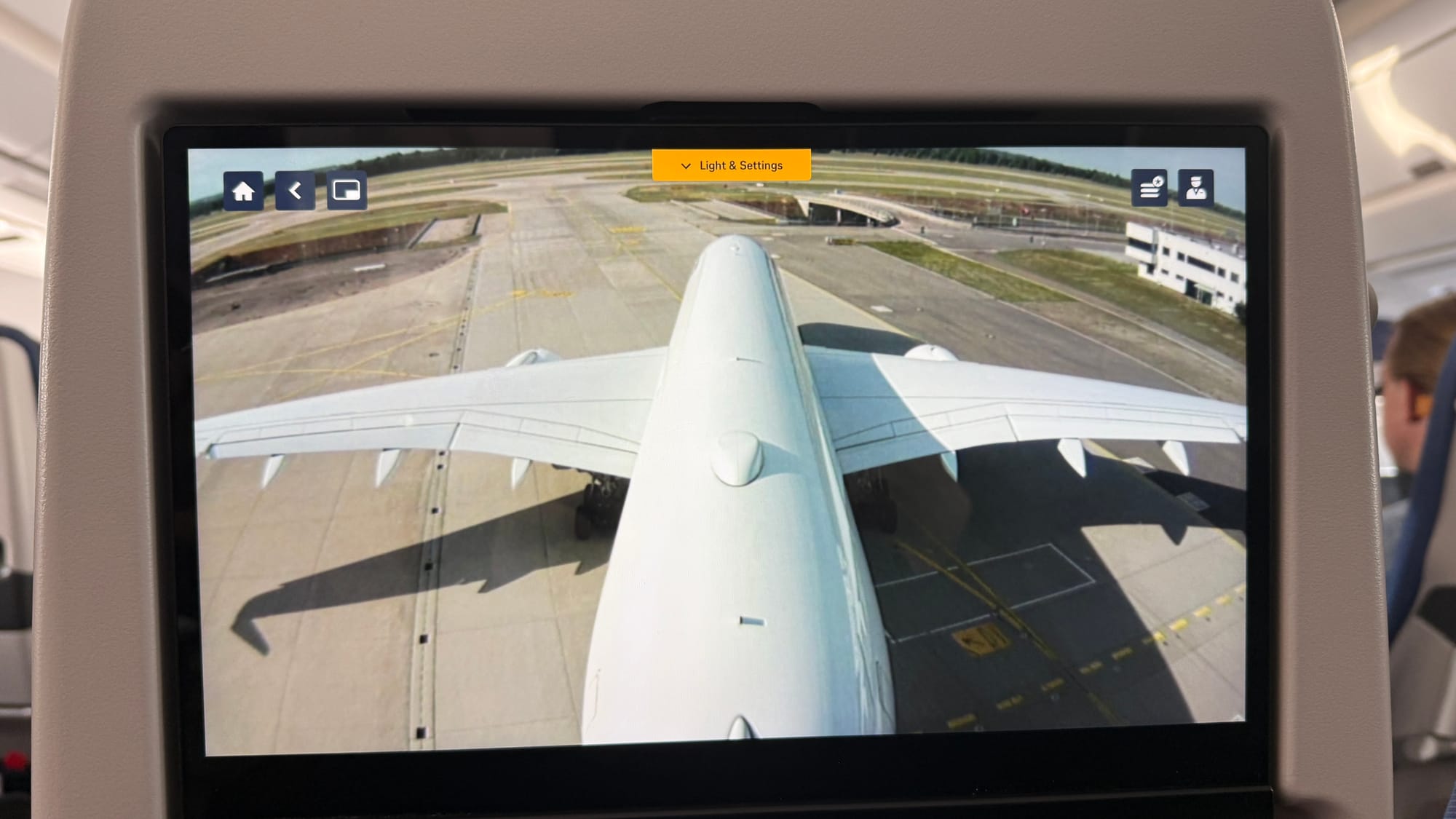
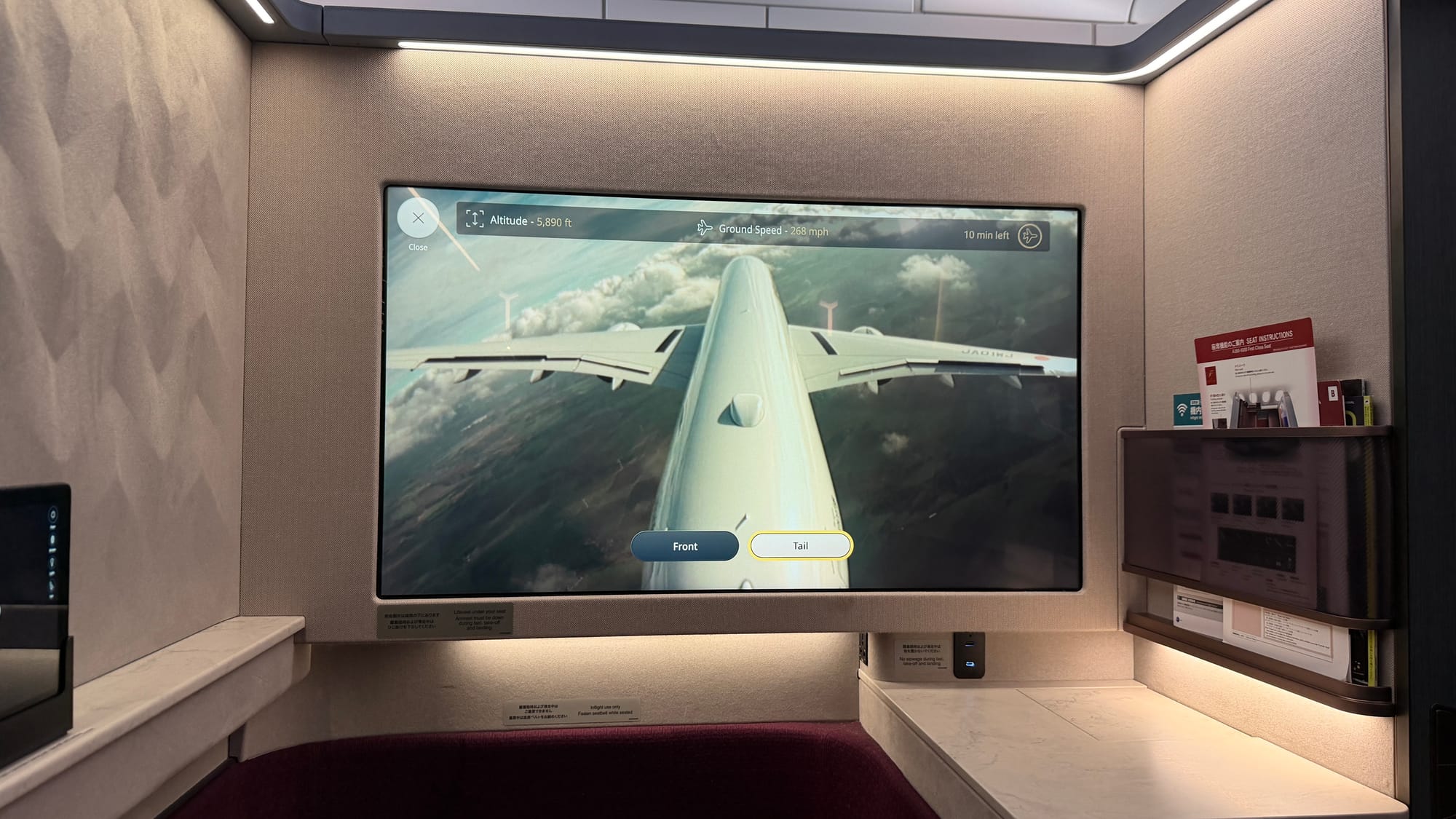
A lot of the aircraft types that have come out in recent years — like the 787 and A350 — have a customizable option where the airline can choose to install cameras at various points around the aircraft. These give passengers a view outside the aircraft, allowing for perspectives they otherwise wouldn't have access to. When the camera is mounted on the tail itself, you get a view down the top of the fuselage and across the wings, which looks phenomenal while taxiing, taking off, and landing. Some airlines even opt to install multiple cameras — with alternative views such as a downward or sideways angle.
These unique devices are fun for aviation geeks — but there are several practical reasons for any traveler to tune in.
These unique devices are fun for aviation geeks — but there are several practical reasons for any traveler to tune in.
They help combat jet lag
Some newer planes — like the 787 — have electronically dimmed windows that flight crew can lock at any brightness. It is common for crew on these aircraft to dim all the windows during cruise so passengers can sleep. Even on older aircraft where there is individual control of the windows, it's common courtesy to keep them closed for a majority of the flight. This traps passengers in an alternate world where it feels like nighttime regardless of what time it actually is outside.
This is one of the main drivers of jet lag: having no idea what time of day it is. Our circadian rhythms have been trained over centuries — see light, time to get up; see dark, time to sleep. The camera feeds provide a way for passengers to start orienting to the time zone they're flying into — even while every window in the cabin remains shut.
They're a window for the windowless
Though not an issue on single aisle planes, two-aisle aircraft have a middle section of seats that have heavily obscured window views — if any at all. External cameras give those passengers a view outside — and with it comes information about what the plane is actually doing.
Most people generally know when descent has started — but it's trickier for those with no view to predict when the plane is about to take off or touch down. For anxious flyers, not having a way to know what's happening can be difficult. Watching the cameras takes the surprise out of the experience as passengers can watch the runway approach instead of waiting and wondering.
They let passengers see how flying works
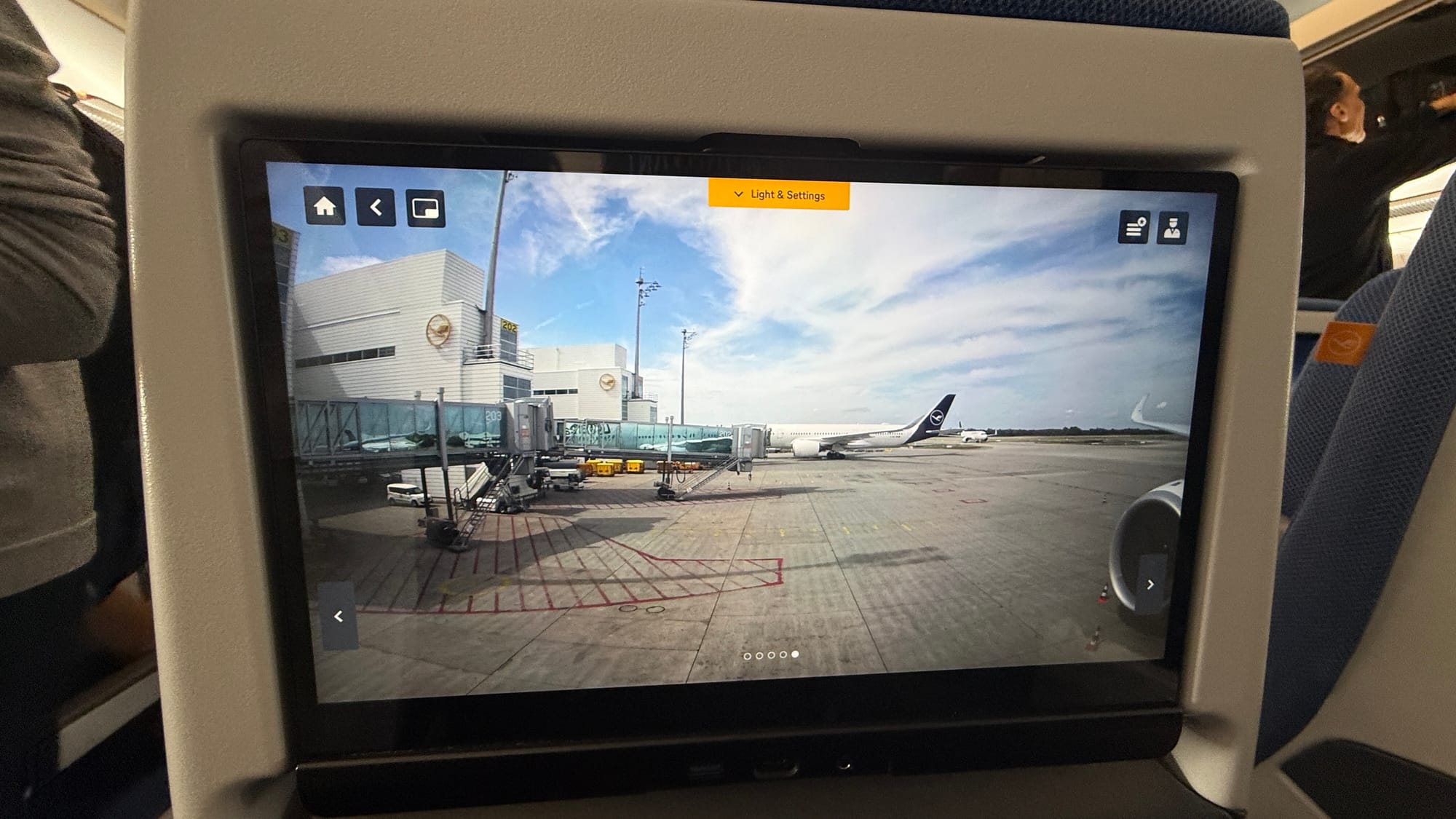
Passengers don't usually get much insight into what a plane is doing between the gate and the sky. Since these cameras give a wide field of view of the aircraft and everything around it, viewers get to watch the operation happen live — from navigating the taxiways to lining up on the runway.
The educational advantage also applies to the aircraft itself. Cameras show flaps moving, spoilers coming up, and thrust reversers deploying during landing — components of an airliner that the everyday passenger never gets to see.
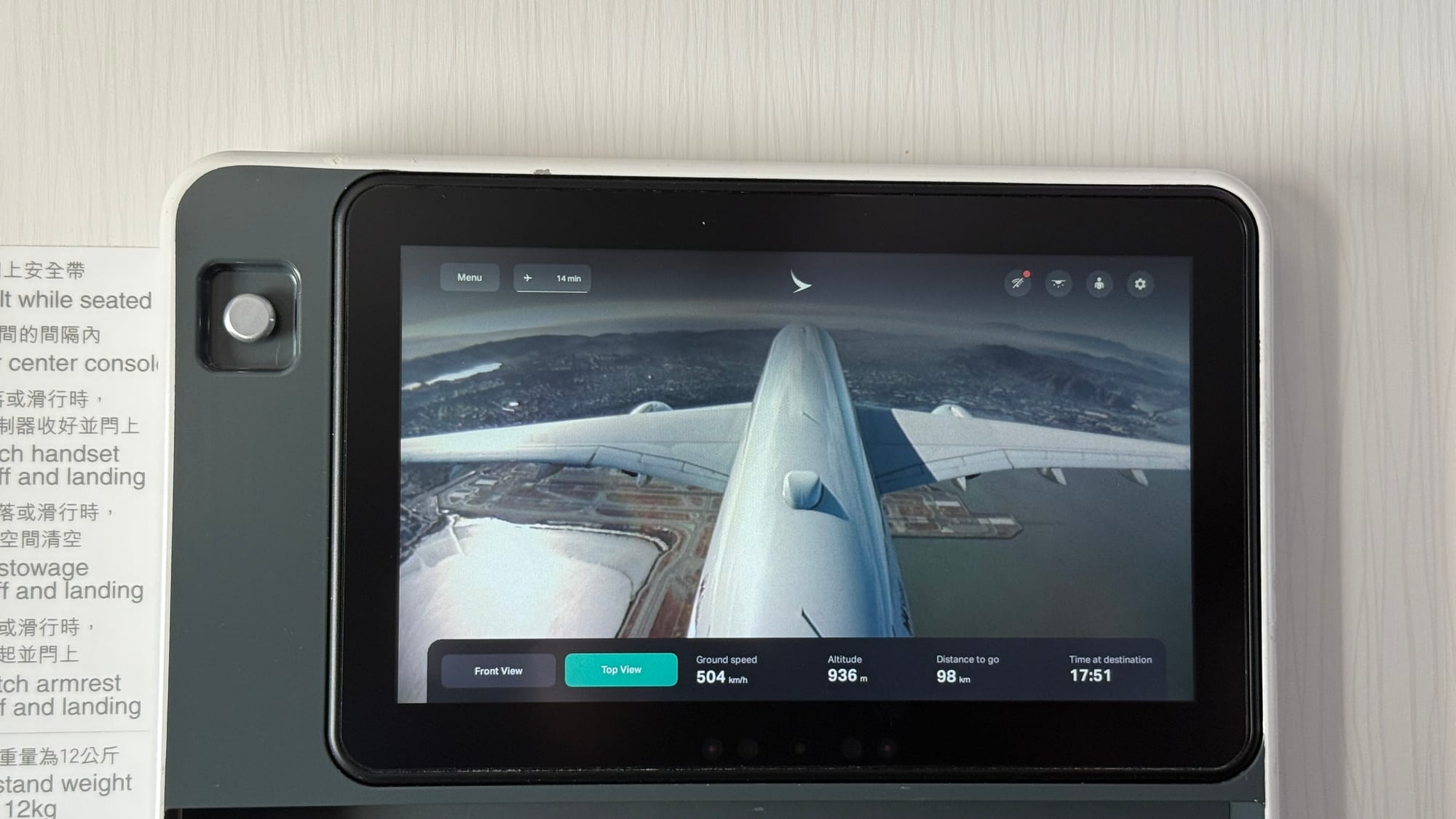
External aircraft cameras might not be everybody's first choice when it comes to in-flight entertainment — but there's no denying the practical benefits of turning it on every once in a while. Next time you're on a long-haul flight, check whether the airplane has cameras by navigating through the entertainment system. In my experience, even people who aren't aviation lovers at least get a solid amount of entertainment out of it.