Antarctica is the world's coldest, driest and least-populated continent, and it's becoming more accessible from an unlikely gateway in Cape Town. For a few months every year, specially arranged flights to Antarctica leave Cape Town and head south toward the frozen continent, and the next season begins this November.
These operations are unlike almost any other flight in the world. There are no normal airports, no long-term airport infrastructure and very few options if the weather suddenly changes.
One of the companies behind these unique journeys is White Desert, a British luxury travel company that runs its Antarctic flights out of Cape Town. The company flies tourists, scientists and other visitors to the continent in just over five hours, rather than the days it takes to travel there by sea.
White Desert
White Desert operates its Antarctic programs during the continent's short summer season, generally between November and February. This is when Antarctica experiences its most favorable conditions for tourism and aviation, with longer periods of daylight and comparatively milder weather.
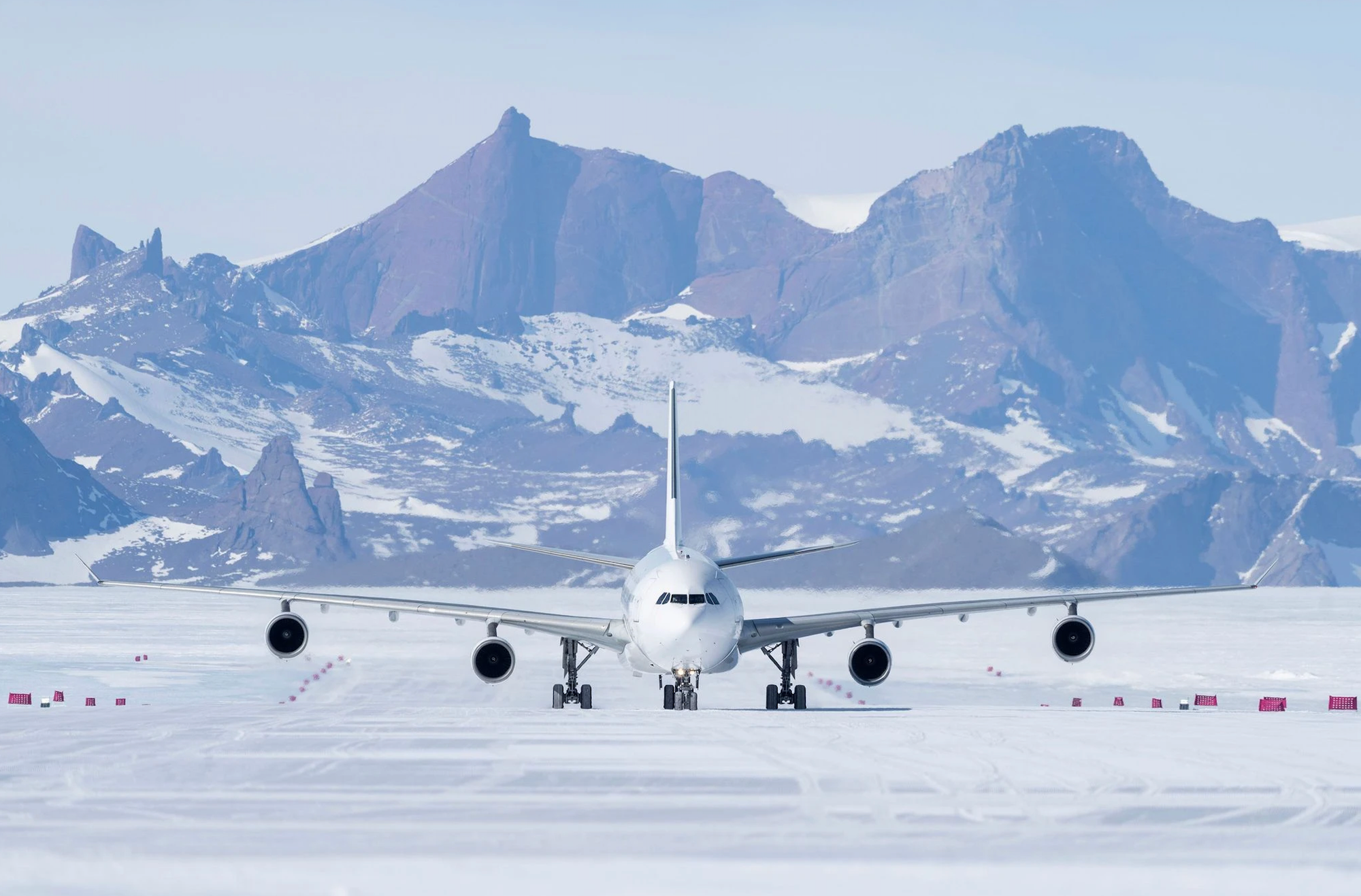
The company operates Wolf's Fang Runway, a private blue-ice runway in the interior of Antarctica that opened in 2017. Unlike a conventional airport runway, it is formed from natural glacial ice and requires continuous monitoring to ensure that it remains suitable for aircraft operations.
White Desert also operates luxury camps on the continent, allowing visitors to spend several days experiencing Antarctica rather than simply flying in and leaving immediately. None of it is cheap. A one-day trip costs $16,500, and multi-day trips run from about $75,000 to more than $115,000.
For those who want to explore further, the company can use smaller aircraft to transport guests to different parts of Antarctica. This gives visitors the opportunity to see areas that would otherwise be extremely difficult to reach.
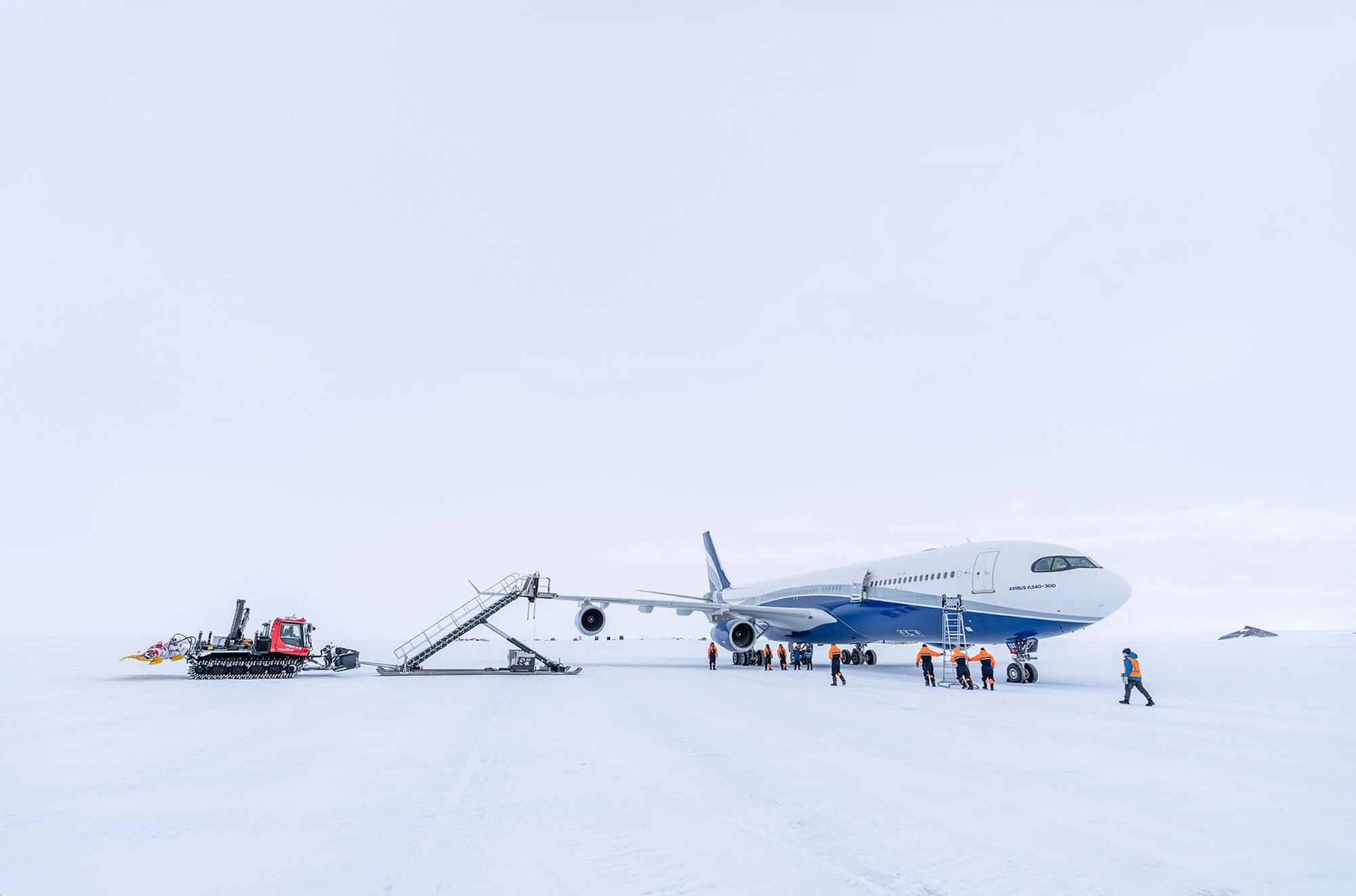
The main flights use large Airbus A340 and A330 jets from Hi Fly, a charter airline that supplies planes along with their crews. In late 2025, Hi Fly became the first airline to fly an A330 to Antarctica. These operations are carefully planned because flying into Antarctica is very different from operating a normal commercial route.
Antarctica: The Ice Continent
Antarctica is centered around the geographic South Pole and contains the world's largest ice sheet. Despite its extreme conditions, the continent is home to remarkable wildlife such as penguins, seals and whales.
It is also one of the most important places on Earth for scientific research. Research stations run by many different countries are spread across the continent. Scientists there study everything from climate change and ice to astronomy and wildlife.
Tourism is another growing part of Antarctica's relationship with the outside world. Visitors can experience the landscape and wildlife, although access to many areas is strictly controlled to protect the environment.
Antarctica is governed through the Antarctic Treaty System rather than being owned by a single country. The system regulates activities on the continent and places a strong focus on peaceful use, scientific research and environmental protection.
Even during the summer, when activity increases significantly, Antarctica remains one of the least populated places on Earth.
Getting to Antarctica: The Hard Part
Getting to Antarctica by aircraft is not as simple as booking a normal flight.
The continent has very limited aviation infrastructure, and many of the landing areas are built on snow or ice rather than conventional paved surfaces. This means that pilots, engineers and ground crews have to work in conditions that are very different from those found at normal airports.
Timing is extremely important.
Antarctic aviation operations are generally concentrated during the summer months between November and February. During the winter, extreme cold, darkness and severe weather make many tourism and aviation operations impractical.
Once an aircraft begins its journey south, there are also very few alternative airports available. This means that flight planning becomes extremely important. The aircraft must carry enough fuel and have carefully calculated contingency plans, because there is no network of nearby airports like there would be when flying between major cities.

The Runway Is Ice
Perhaps the most interesting part of Antarctic aviation is the runway itself.
At Wolf's Fang, the runway is made from blue glacial ice. Unlike a normal airport runway, its condition can change depending on temperature, ice movement and weather.
The runway therefore has to be continuously inspected and monitored before aircraft operations can take place.
For the pilots, landing on an Antarctic ice runway is also a very different experience. Navigation and approach procedures are carefully planned, and visual conditions can become extremely important. Weather, visibility, wind and the condition of the landing surface all have to be considered before an aircraft can safely land.
There is also no room for complacency.
Antarctic weather can change quickly, with strong winds, blowing snow and poor visibility creating serious challenges for aviation. Crews and ground teams therefore need constant weather information before deciding whether an operation can proceed.
An Aviation Operation Like No Other
What makes flying to Antarctica so fascinating is that the aircraft itself may not look particularly unusual, but almost everything surrounding the flight is.
There are no major terminals, busy taxiways or rows of aircraft waiting for passengers. Instead, there is an enormous frozen landscape, an ice runway and a small group of highly trained people making the operation possible.
The journey from Cape Town to Antarctica therefore represents much more than simply another flight. It is a carefully planned aviation operation that combines specialized aircraft, experienced crews, constantly changing weather and one of the most extreme environments on Earth.
For passengers, the destination is Antarctica. But for anyone who loves flying, the flight itself is part of the adventure.