
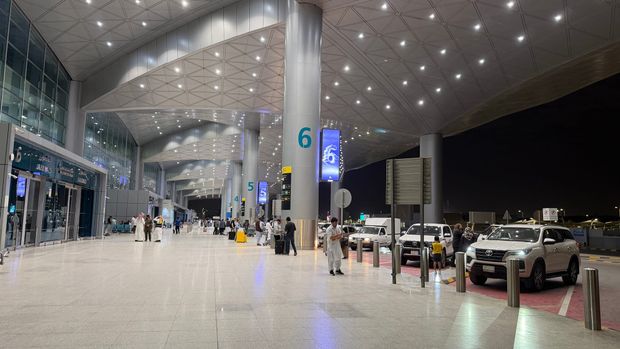
The Saudi Arabia airport attacks are giving the new Mecca Joint Defense Agreement an early test. Missile and drone strikes by Yemen's Houthi rebels on Saudi airports have exposed the limits of regional military cooperation. Although the pact could strengthen Saudi Arabia's ability to defend its airspace, questions remain over whether a mutual defense commitment can prevent further attacks on the kingdom's civilian aviation infrastructure.
Mecca Joint Defense Agreement
A New Pact Meets Its First Test
Contrail
The Attacks
On Thursday, a Houthi strike on King Khalid International Airport in Riyadh damaged airport facilities and a Saudia aircraft, according to Saudi Arabia's civil aviation authority. The authority says attacks on Riyadh's airport and on Abha airport in the south have killed three people and injured 36 this week. The strikes disrupted international flights and prompted Saudi-led retaliatory strikes against Houthi positions in Yemen.
On Friday, the European Union Aviation Safety Agency, Europe's aviation regulator, expanded its warning against operating in parts of Saudi airspace.

What the Agreement Says
The escalation comes two months after Saudi Arabia, Turkey and Pakistan signed the Mecca Joint Defense Agreement on August 7. The agreement states that an armed attack against one signatory will be regarded as an attack against all three, establishing a collective deterrence framework amid growing regional instability. However, the agreement's public announcement didn't specify exactly what military assistance each country would be obliged to provide in response to an attack.
The question now is whether this new partnership can meaningfully change the security calculations of Yemen's Houthi movement. For airlines, airports and passengers, the question is whether the alliance makes flying in the region safer, riskier or simply no different.
The agreement brings together three countries with a combined total of about 1.4 million active troops, according to the Global Firepower index. In principle, combining the trio's military capabilities could improve Saudi Arabia's ability to detect, intercept and respond to incoming missiles and drones. Access to additional air defense technology could also help protect vulnerable infrastructure, including airports.
Turkey and Pakistan have certainly indicated a willingness to help. On September 19, Turkish Foreign Minister Hakan Fidan said Saudi Arabia "may have some military needs, especially on some technical issues," and that Turkey would have "no issues in meeting these." On Monday, the three countries said in a joint statement that they would "move immediately to the practical implementation of the collective defence commitments," including a rapid deployment of Turkish and Pakistani forces to Saudi Arabia.
Will It Deter the Houthis?
The agreement's effectiveness will ultimately depend on how the Houthis weigh the risks of attacking Saudi Arabia now that Turkish and Pakistani involvement is on the table.
A credible commitment to collective defense could raise the potential cost of further strikes. If Houthi leaders believe that attacking Saudi infrastructure could trigger a coordinated response involving Turkish or Pakistani forces, they may become more cautious about targeting Riyadh. However, the pact may have limited immediate influence over the group's calculations. The Houthis' willingness to strike Saudi airports suggests that the threat can't be addressed through diplomatic declarations alone.
What It Means for Flying
The consequences of the Houthi attacks extend well beyond the battlefield. Saudi Arabia's airports are important hubs connecting Europe, Asia and Africa, and Riyadh and Jeddah serve large business, tourism and religious travel markets both in the Middle East and around the world.
The latest attacks have put that connectivity at risk. Following the strikes, Lufthansa Group and several Indian airlines suspended flights to Riyadh. The UK now advises against all but essential travel to Riyadh and several other parts of Saudi Arabia.
The Mecca Joint Defense Agreement represents an attempt by Saudi Arabia, Turkey and Pakistan to strengthen their collective security at a time when existing regional arrangements are under pressure. Its value, however, will be measured by practical outcomes rather than the symbolism of its signing. The agreement has the potential to make Saudi infrastructure more resilient and raise the costs of future attacks. If cooperation remains largely on paper, its immediate effect on the threat facing Saudi airports may be limited.
The latest strikes show that the agreement hasn't, by itself, prevented attacks on civilian aviation. Whether it can reduce the likelihood or consequences of future strikes will depend on how quickly its signatories turn their commitment into real operational cooperation.


